Beyond the Farm: How Wild Mushroom Foragers Are Changing the Way America Thinks About Food
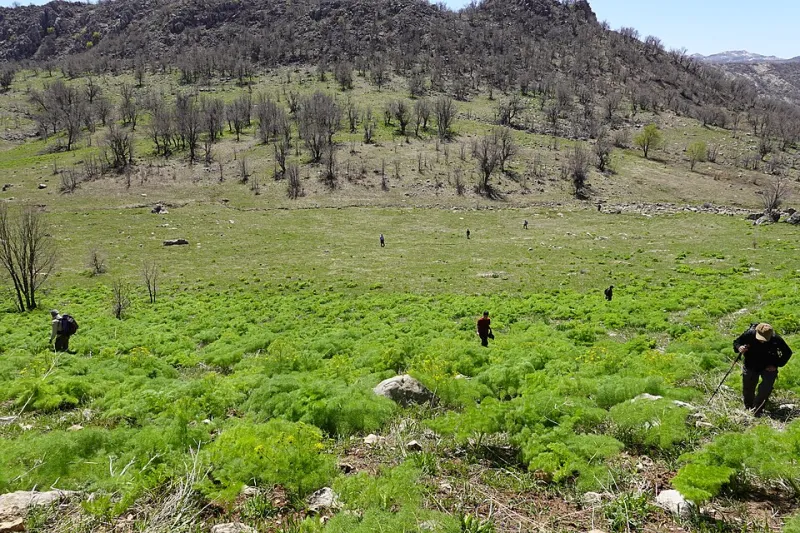
Photo: Khoshhat, CC0, via Wikimedia Commons
There's a moment that every serious forager describes in almost the same way. You're moving through the woods — maybe it's a rain-soaked Pacific Northwest morning, or a crisp October afternoon in the Appalachian foothills — and then you see it. A flash of gold or rust or cream tucked beneath the leaf litter. A chanterelle, a hen-of-the-woods, a black trumpet pushing up through the duff like it's been waiting for you specifically. And just like that, your whole idea of what "harvest" means starts to quietly unravel.
Wild mushroom foraging has been part of human food culture for millennia. But in the United States, it's experiencing something of a renaissance — part food trend, part ecological awakening, part pushback against a food system that's optimized everything for shelf life and convenience at the expense of flavor and meaning.
The Forest as a Farm You Didn't Plant
Ask most Americans where their food comes from and you'll get some version of the same answer: a farm, a field, a greenhouse. The idea that a forest floor — unmanaged, ungoverned, gloriously chaotic — could be a legitimate food source is one that our industrial food culture has spent decades quietly editing out of the conversation.
Foragers are editing it back in.
"People think of harvest as something you do to something you planted," says Elena Marsh, a mycologist and foraging educator based in western North Carolina who leads seasonal walks through the Southern Appalachians. "But fungi don't work that way. You can't own a mycelium network. You can't schedule it. You just have to show up and pay attention."
That relationship — between forager and forest, between patience and reward — is exactly what's drawing a new generation of food lovers into the woods. Farmers' markets in cities like Portland, Asheville, Denver, and Chicago now regularly feature vendors selling wild-harvested chanterelles, lion's mane, morels, and maitake. High-end restaurants from New York to Nashville have built entire seasonal menus around relationships with local foragers. And social media has created sprawling online communities — some with hundreds of thousands of members — where people share finds, swap identification tips, and celebrate the quiet thrill of eating something nobody grew.
Reading the Season Through Spores
One of the things that makes wild mushroom foraging so philosophically interesting — and so relevant to anyone who cares about eating seasonally — is that fungi are among the most honest seasonal indicators on the planet. They don't respond to marketing calendars or shipping logistics. They fruit when conditions are right: the right temperature, the right moisture, the right relationship with the trees and soil around them.
Morels emerge in spring, often following the bloom of certain wildflowers in a kind of ecological choreography. Chanterelles are a summer-into-fall phenomenon across much of the country. Hen-of-the-woods, also called maitake, tends to appear at the base of oaks in autumn. Learning to forage is, in a very real sense, learning to read the land the way it actually works — not the way a produce aisle suggests it does.
"There's no faking it with wild mushrooms," says James Okafor, a chef in Chicago who sources a significant portion of his fall menu from two regional foragers he's worked with for years. "When my guy calls and says the black trumpets are coming in, that's the menu. I don't get to negotiate that. And honestly? That's what makes it exciting."
For Okafor, sourcing from foragers has changed his relationship with seasonality more profoundly than any farm partnership he's had. "A farmer can extend a season, manipulate a harvest window. Foragers can't do that. They're just reporting what the forest is doing."
The Safety Question Nobody Wants to Skip
Any honest article about wild mushroom foraging has to spend some time here, because the risks are real. There are genuinely dangerous mushrooms growing across the United States — the death cap (Amanita phalloides) and the destroying angel (Amanita bisporigera) among the most lethal — and overconfidence has sent people to the hospital.
But experienced foragers and mycologists are quick to point out that the solution isn't avoidance — it's education. Organizations like the North American Mycological Association (NAMA) run forays and educational events across the country. State-level mycological societies exist in nearly every region. Apps like iNaturalist have made photographic identification more accessible, though seasoned foragers caution against relying on any single tool.
"Start with a handful of species that have no dangerous look-alikes," advises Marsh. "Chicken-of-the-woods, giant puffballs, chanterelles — these are great beginner mushrooms because they're distinctive. Build your knowledge slowly, go out with experienced people, and never eat anything you're not completely certain about."
The broader foraging community has developed a culture of caution and mentorship that functions as a kind of informal safety net. Experienced foragers actively encourage beginners to seek human expertise over app-based identification, and the ethos of "when in doubt, throw it out" is widely repeated.
Sustainability and the Ethics of Taking
Wild harvesting raises another set of questions that the foraging community takes seriously: what does sustainable look like when your farm is a public forest?
Most experienced foragers follow a loose but widely shared set of principles. Take no more than a third of what you find in any given spot. Use mesh bags so spores can disperse as you walk. Don't disturb the mycelium network beneath the surface. Avoid overharvesting in the same location season after season.
There's also a growing conversation about access and equity — about who gets to forage, and where. Many state and national forests allow personal-use harvesting within certain limits, but regulations vary widely and aren't always clearly communicated. Some foragers are advocating for clearer, more equitable public access policies, particularly as commercial foraging operations have drawn scrutiny for stripping certain areas.
"The forest is a commons," says Marsh. "That's a concept we've mostly forgotten in this country. Foraging, done right, is a way of re-learning it."
What the Mushroom Knows
There's something almost philosophical about the way fungi challenge our food system assumptions. They're not planted, not irrigated, not harvested by machine. They exist in a web of ecological relationships — with trees, soil bacteria, insects, rainfall — that no farmer fully controls and no corporation can patent. They fruit on their own schedule, in their own time, according to rules that predate agriculture by hundreds of millions of years.
In a food culture that has spent decades trying to eliminate unpredictability, wild mushrooms are a reminder that some of the best things resist that project entirely.
For the foragers heading into the woods this fall with their mesh bags and their hard-won knowledge, that's not a problem to be solved. It's the whole point.
"Every time I find something out there, it feels like the forest is offering it," says Okafor. "You can't manufacture that. You can only show up and be ready."
Harvest, it turns out, was never just about fields.