Picking by Moonlight: The Night Harvesters Who Say Darkness Makes Better Food
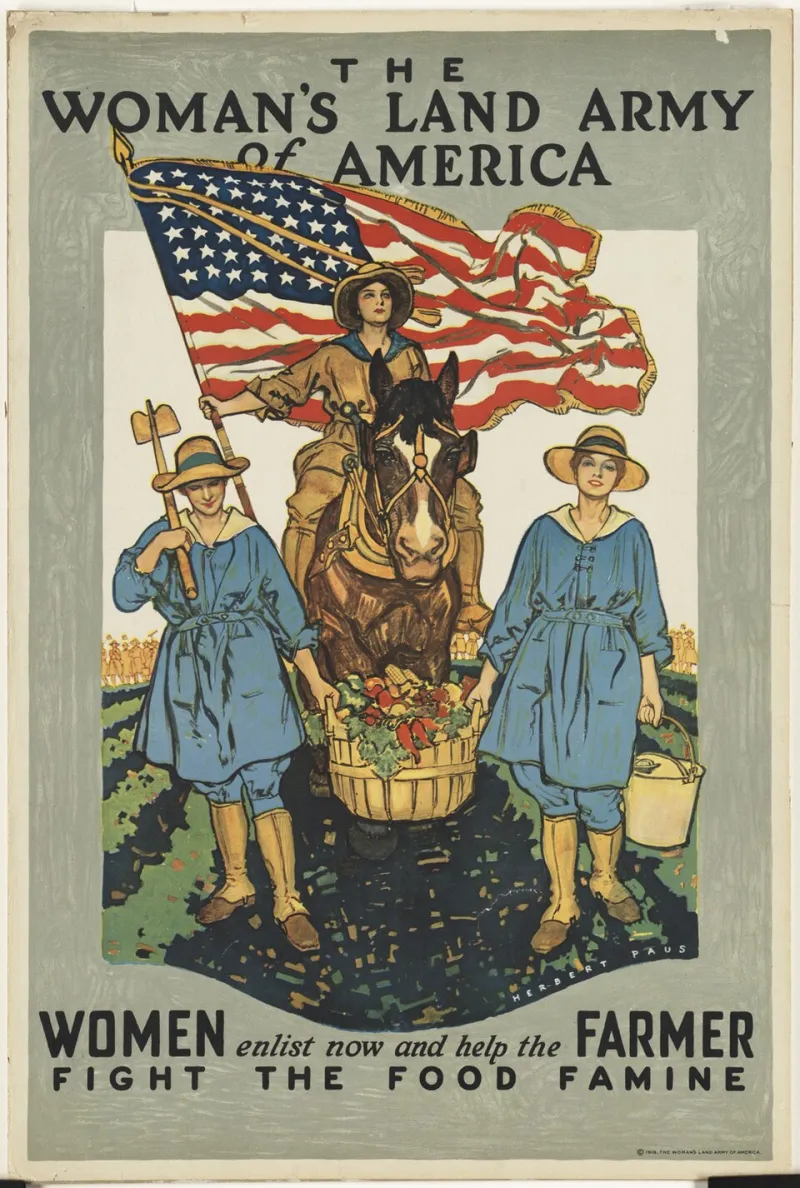
Photo: Boston Public Library, CC BY 2.0, via Wikimedia Commons
It's 2 a.m. on a Tuesday in late August, and Renata Solís is moving through her lettuce rows with a headlamp and a harvest knife. The air in her small farm outside Sonoma, California sits cool and still—maybe 58 degrees—and the leaves she's cutting are crisp in a way they simply won't be six hours from now when the sun gets serious about the day.
"I tried explaining this to a distributor once," she says, pausing between rows. "He looked at me like I'd lost my mind. But then he tasted the difference, and he stopped asking questions."
Solís is part of a loosely connected movement of farmers, market gardeners, and small-scale growers across the U.S. who have quietly abandoned the convention of daylight harvesting in favor of working under darkness—or at least before the heat of the day fully arrives. Their reasons range from personal intuition to emerging plant biology research, and the results they're reporting are turning heads in culinary and agricultural circles alike.
The Problem With Harvesting in the Heat
To understand why nighttime harvesting has a growing number of advocates, it helps to understand what happens to a plant—and its produce—as daytime temperatures climb.
During the heat of the day, plants open their stomata (the tiny pores on leaf surfaces) to transpire moisture and cool themselves. That process draws water outward and upward through the plant, which sounds fine until you cut it. Once severed from its root system, a warm, transpiration-active plant loses moisture rapidly. Wilting begins within minutes, not hours. Cellular structure starts to break down. Sugar levels, which peak through photosynthesis during daylight, begin converting to starches as the plant's metabolic processes respond to the stress of harvest.
At night, that equation flips. Stomata close. Transpiration slows dramatically. Sugar content, built up through the day's photosynthetic work, is at its highest concentration—stored, stable, and ready. The plant is, in a sense, fully charged.
"Think of it like a battery," explains Dr. Theo Marchetti, a postharvest plant physiologist who consults with independent farms through a university extension program in the Pacific Northwest. "The plant spends the day converting sunlight into sugars and phytonutrients. By evening, those compounds are at peak accumulation. If you harvest then—or in the early morning hours before the day's heat stresses the tissue—you're capturing the plant at its nutritional apex."
Marchetti is careful to note that large-scale peer-reviewed studies specifically on nocturnal harvest timing are still limited. But the foundational plant biology is well established, and a handful of smaller studies from European agricultural research institutions have found measurable differences in vitamin C retention, anthocyanin concentration, and overall antioxidant levels in produce harvested in cooler, lower-light conditions.
Farmers Doing the Experiment Themselves
In the absence of broad institutional research, many farmers have become their own scientists.
Jamison Kowalczyk runs a 40-acre diversified vegetable operation outside Asheville, North Carolina, that supplies three local restaurants and a weekly CSA. Three years ago, he started splitting his harvests experimentally—picking the same crop at different times of day and tracking shelf life, flavor feedback from chefs, and visual quality over 72 hours.
"The night and early morning harvests consistently outlasted the afternoon ones by a day to a day and a half," he says. "For a restaurant kitchen, that's enormous. That's the difference between a vegetable that shows up ready to use and one that needs to be used immediately or it's going to the compost."
Kowalczyk now runs almost all of his leafy green and herb harvests between 10 p.m. and 4 a.m. during peak summer months. Root vegetables and winter squash, which are less sensitive to temperature-driven deterioration, still get harvested during regular daytime hours.
On the other side of the country, Priya Nambiar tends a 12-acre certified organic farm in the Hudson Valley of New York. She came to night harvesting partly out of necessity—summer temperatures have been climbing, and her crew was struggling with heat exhaustion during afternoon picking sessions—but she stayed with it because of what she noticed in the food itself.
"The basil especially," she says without hesitation. "When we harvest basil during the day in July or August, it starts blackening within hours. When we cut it at night, it stays green and fragrant for two, sometimes three days longer. That's not a minor difference. That's the difference between a product I'm proud of and one I'm apologizing for."
The science behind basil's notorious blackening—technically enzymatic browning triggered by cellular damage and heat—supports her observation. Lower temperatures slow the enzymatic reaction significantly, giving the herb a meaningful window of additional viability.
What the Chefs Are Saying
The restaurants and buyers working with night-harvest farms have become some of the loudest advocates for the practice, even if they can't always articulate exactly why the produce is better. They just know it is.
Marcus Webb, executive chef at a farm-to-table restaurant in Portland, Oregon, has been sourcing from two night-harvesting farms for the past two years. "There's a brightness to the vegetables that I notice immediately," he says. "The colors are more saturated. The flavors are more concentrated. Arugula actually tastes like arugula—peppery and alive—instead of that flat, slightly bitter thing you get when it's been sitting in a cooler for three days after a midday harvest."
Webb acknowledges that he can't run a double-blind taste test in a professional kitchen. But he's a practical man, and the practical result is that he's throwing away less and buying more from those two farms specifically.
The Logistical Reality (It's Not Easy)
For all its appeal, night harvesting comes with real challenges that explain why it hasn't swept through American agriculture wholesale.
Labor is the obvious one. Asking farm workers to shift to overnight schedules is a significant ask, and it raises legitimate concerns about worker safety, adequate lighting, and the disruption to personal and family life. Solís, the Sonoma lettuce farmer, works her night harvests largely solo or with one trusted crew member during peak season, which limits her scale.
Equipment is another factor. Adequate lighting for safe, precise harvesting—especially for delicate crops like herbs and salad greens where you need to see what you're cutting—requires investment in headlamps, field lighting, and sometimes generator setups that smaller farms may not have budgeted for.
And then there's the market infrastructure. Most wholesale distribution systems are built around daytime pickup schedules. Harvesting at 2 a.m. only pays off if you can get that produce into a cooler quickly and to buyers who are set up to receive early-morning deliveries.
"It requires rethinking your whole logistics chain," Kowalczyk admits. "It's not something you can just start doing. You have to build the systems around it."
A Practice as Old as Farming Itself
There's an irony in framing night harvesting as a trend or an innovation. Many traditional farming cultures around the world have long timed harvests to the cooler parts of the day or night, guided by accumulated wisdom rather than plant biology research. The idea that peak-heat midday harvesting became the industrial norm is itself a relatively recent development, driven by the economics of large-scale mechanized agriculture where harvest windows are determined by equipment schedules, not plant physiology.
In that sense, what farmers like Solís, Kowalczyk, and Nambiar are doing isn't radical. It's a return to something older—a recalibration toward what the plant actually needs rather than what the supply chain finds convenient.
As the sun starts to rise over Solís's lettuce fields, she's already done. Her coolers are packed, her crew is heading home, and the greens sitting in those bins are as good as they're going to be—harvested at the moment the plant had the most to offer.
"The food knows when it was picked," she says, pulling off her headlamp. "I think the people eating it know too, even if they can't say exactly why."