Buried in Basil and Loving It: How to Survive (and Thrive) During Peak Harvest Chaos
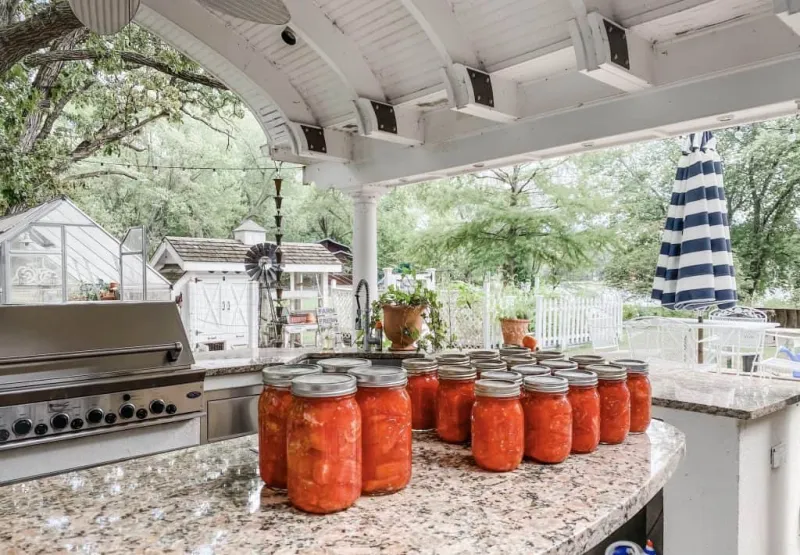
Photo: home garden harvest abundance tomatoes zucchini canning jars kitchen, via livinglargeinasmallhouse.com
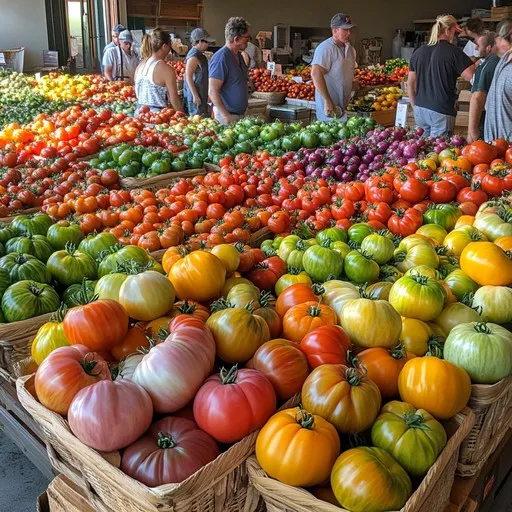
There's a specific kind of panic that sets in around the second week of September. You walk out to the garden in the morning—coffee in hand, still half asleep—and stop dead in your tracks. The zucchini you swore was the size of a finger yesterday is now a small canoe. The cherry tomatoes have staged a full coup. And somewhere under a tangle of vines, there are probably three more cucumbers you'll never find until it's too late.
Welcome to the harvest glut. It's chaotic, slightly absurd, and—according to a growing number of home growers and food preservers—one of the best things that can happen to you all year.
The Glut Is Real, and It's Not Just You
If you've ever felt like your garden turned on you in late summer, you're in very good company. Extension agents across the country field a predictable surge of calls every August and September from gardeners who planted with enthusiasm in May and are now genuinely overwhelmed.
"People call us half laughing, half stressed," says Maria Delgado, a horticulture educator with the University of Wisconsin-Extension. "They want to know what to do with forty pounds of Roma tomatoes or a zucchini that's basically become furniture. And the honest answer is: there are so many good options. You just have to slow down enough to see them."
CSA members—those who subscribe to weekly boxes from local farms—often experience a version of the same thing. The box arrives full of unfamiliar greens, more summer squash than a family of four could reasonably eat in a week, and perhaps a kohlrabi that nobody knows what to do with. The abundance is real, and without a plan, it can tip from exciting into genuinely stressful.
Preservation Is a Skill, Not a Hobby
For generations of American families, putting food up for winter was simply what you did. Canning, fermenting, pickling, and drying weren't weekend projects—they were survival strategies. That institutional knowledge largely faded with the rise of industrial food systems, but it's making a serious comeback, and the harvest glut is a big reason why.
Joanna Tran, a home food preserver in Portland, Oregon, started water-bath canning five years ago after her backyard tomato plants produced more fruit than she could give away. Now she processes over two hundred jars of preserved goods each fall—sauces, pickles, jams, fermented hot sauce—and says the practice has fundamentally changed her relationship with food.
"Once you know how to preserve, the glut stops feeling like a problem," she explains. "It starts feeling like an opportunity. Every extra pound of tomatoes is basically a future meal you're putting in the bank."
For beginners, the learning curve is real but manageable. Freezing is the easiest on-ramp: blanch green beans, corn, or leafy greens briefly in boiling water, cool them fast in an ice bath, and bag them up for months of use. Water-bath canning works well for high-acid foods like tomatoes, pickles, and fruit preserves. Fermentation—making sauerkraut, kimchi, or lacto-fermented pickles—requires nothing more than salt, a jar, and a little patience.
The USDA's National Center for Home Food Preservation (nchfp.uga.edu) remains the gold standard for safe canning guidance, and it's genuinely user-friendly. Extension offices in most states also offer free workshops this time of year, often timed specifically to the harvest rush.
Sharing the Wealth: Community Solutions That Actually Work
Not everyone has the time, equipment, or inclination to become a home canner. And that's completely fine—because one of the most satisfying responses to surplus is simply giving it away.
Freedom Gardens, a community food-sharing network in Minneapolis, coordinates produce donations between home growers and local food pantries. Volunteers pick up excess harvests and deliver them same-day to distribution sites. Founder DeShawn Collins says the program has grown every year since it launched, driven in large part by gardeners who feel guilty watching food go to waste.
"People want to do something meaningful with their extra food," Collins says. "Donating it to someone who needs it feels good in a way that composting, as useful as it is, just doesn't."
More informal sharing networks have also taken off. Neighborhood apps like Nextdoor are full of posts this time of year offering free tomatoes, bags of basil, or armloads of kale. Little free pantry boxes—those small wooden structures that look like birdhouses stocked with food—have become an increasingly common sight in front yards, and many gardeners use them as a first stop for surplus produce.
Farm stands on the honor system, seed swaps, and neighborhood harvest potlucks are all variations on the same theme: abundance is better when it's shared.
The Unexpected Mental Health Angle
Here's something the wellness industry hasn't quite caught up with yet: managing a harvest surplus is genuinely good for your brain.
Researchers studying what's sometimes called "green care" or "horticultural therapy" have documented the stress-reducing effects of gardening for years. But there's something specific about the harvest season that goes beyond the general benefits of time outdoors. Processing food—washing, chopping, canning, stirring a big pot of sauce—is repetitive, tactile, and deeply grounding. It puts you in your body in a way that screens and desks simply don't.
"There's a real meditative quality to shelling beans or slicing tomatoes for hours," says Dr. Priya Anand, a clinical psychologist who studies nature-based interventions. "It's low-stakes, it has a clear endpoint, and it produces something tangible. That combination is genuinely restorative for a lot of people."
The harvest glut also forces a certain kind of creative problem-solving that many people find energizing. What do you make when you have more eggplant than you've ever seen in your life? You figure it out. You call your grandmother. You dig through old cookbooks. You improvise. And when the dish turns out well, the satisfaction is enormous.
Making Peace with Imperfection
One final thing worth saying: not every vegetable gets saved. Some zucchini will become compost. Some tomatoes will split before you get to them. The goal isn't zero waste—it's meaningful use of as much as possible.
The harvest season is, at its core, a reminder that food comes from living systems that operate on their own schedule. The garden doesn't care about your calendar. It produces when it produces, and the best you can do is show up, pay attention, and stay a little flexible.
That's not a failure of planning. That's just what it means to grow food—and honestly, it's one of the better lessons the garden has to offer.