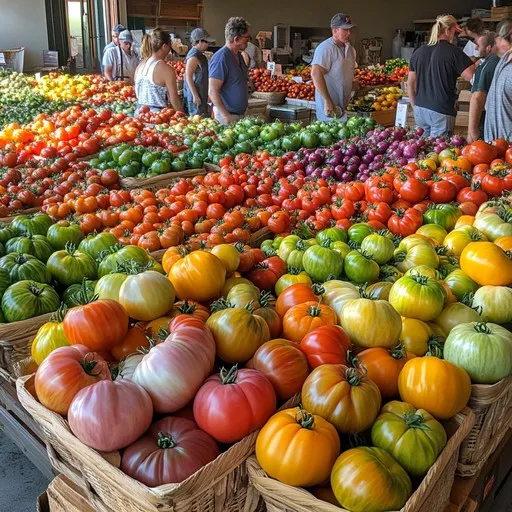
Seed Keepers: The Quiet Revolution Happening in America's Barns and Basements
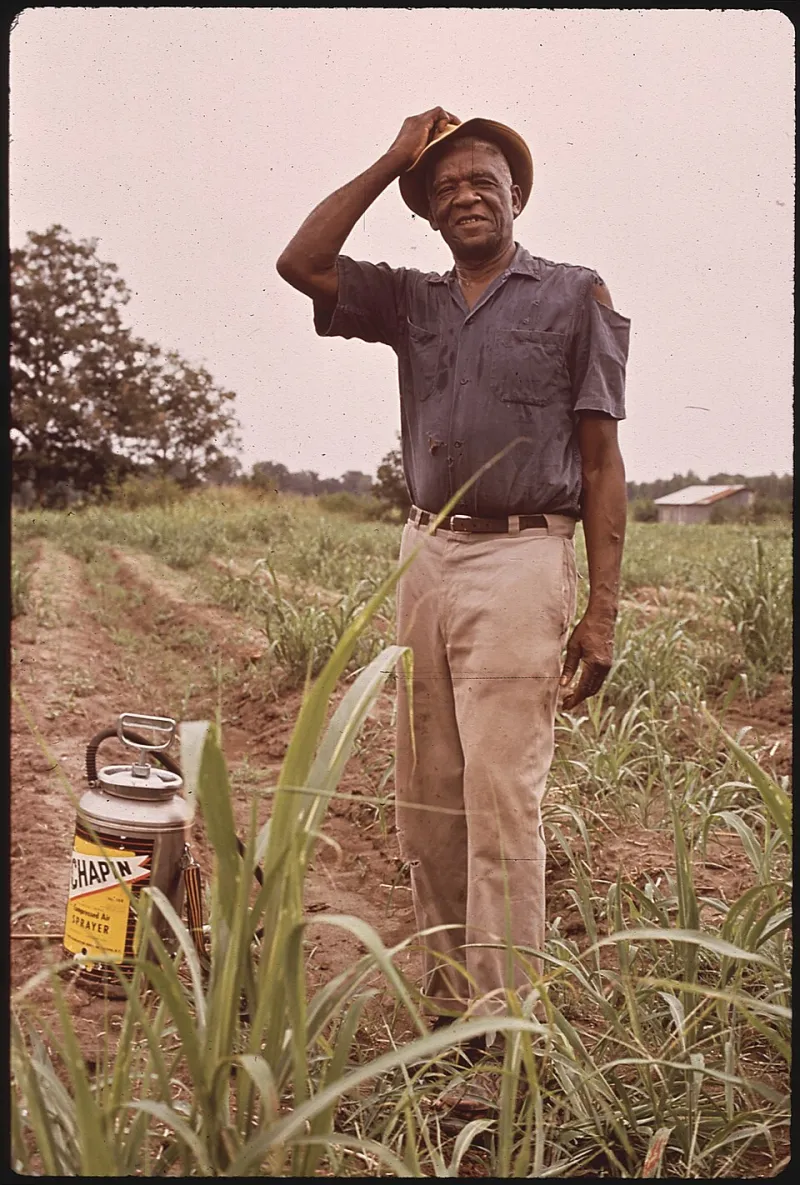
Photo: John Messina, Public domain, via Wikimedia Commons
The Most Radical Thing in Your Grandma's Garden
Somewhere in rural Vermont, Margaret Okonkwo keeps a cedar chest in her barn that she calls her "time machine." Inside, tucked into carefully labeled paper envelopes, are seeds from a Cherokee Purple tomato her grandmother brought north from Tennessee in the 1940s, a speckled pole bean variety she traded for at a county fair, and a winter squash so rare it doesn't have a common name anymore — just the name of the Iowa family that grew it for a hundred years before almost losing it forever.
Okonkwo isn't a botanist or a researcher. She's a small-scale vegetable farmer. But she's also something increasingly important in the American food landscape: a seed archivist.
"Every seed I save is a vote against the system that wants me to buy the same patented hybrid every spring," she says, pulling out a packet and holding it up to the light streaming through the barn door. "These are alive. They carry memory."
That kind of thinking is catching on — fast.
What Seed Banking Actually Means (And Why It Matters Now)
For most of human agricultural history, saving seeds wasn't a political act. It was just farming. You grew your crops, you kept the best seeds from the healthiest plants, and you planted them again next year. Simple. Cyclical. Sovereign.
That changed dramatically over the 20th century as industrial agriculture consolidated seed production into the hands of a shrinking number of corporations. Today, just four companies — Bayer (which acquired Monsanto), Corteva, ChemChina, and Limagrain — control more than 50% of the global commercial seed market. Many of the seeds they sell are patented hybrids, meaning farmers are legally prohibited from saving and replanting them. Every season, you go back and buy again.
The consequences for biodiversity have been staggering. The UN Food and Agriculture Organization estimates that roughly 75% of plant genetic diversity was lost during the 20th century as farmers worldwide abandoned locally adapted varieties in favor of high-yield commercial strains. In the US alone, the National Center for Appropriate Technology notes that thousands of vegetable varieties that were commonly grown a century ago have simply vanished from commercial availability.
That's where the seed savers come in.
A Network Quietly Blooming Across the Country
The modern heirloom seed movement has roots going back to the 1970s, when Kent Whealy and Diane Ott Whealy co-founded the Seed Savers Exchange in Decorah, Iowa. What started as a small network for trading heirloom varieties has grown into one of the largest non-governmental seed banks in the United States, maintaining more than 20,000 rare vegetable, fruit, and grain varieties on a 890-acre Heritage Farm.
But the Seed Savers Exchange is just the most visible node in a much larger, decentralized web. Community seed libraries — often housed inside public libraries, community centers, and food co-ops — have multiplied dramatically over the past decade. The Seed Library of Los Angeles, the Richmond Grows Seed Lending Library in California, and the Hudson Valley Seed Library in New York are just a few of the hundreds of community-based programs where gardeners can "borrow" seeds, grow them out, and return a portion of the harvest seeds to the collection at the end of the season.
Farmer Darius Whitfield runs a two-acre market garden in the Piedmont region of North Carolina and has been participating in regional seed swaps for six years. He's become particularly focused on preserving Black-owned food heritage — varieties like the Sea Island Red Pea, a Gullah Geechee staple, and the Henderson's Black Valentine bean, both of which nearly disappeared from cultivation.
"These seeds are part of our history," Whitfield explains. "When we lose a seed variety, we lose a story. We lose a connection to the people who grew it, who cooked it, who survived on it. That's not something I'm willing to let go of quietly."
The Science of Staying Alive
Preserving seeds sounds simple, but doing it well takes real knowledge and care. Seeds need to be properly dried — typically to below 8% moisture content — and stored in cool, dark, airtight conditions to remain viable. Many experienced seed savers use mason jars with silica gel packets stored in chest freezers, mimicking the conditions of professional seed vaults like the famous Svalbard Global Seed Vault in Norway.
But there's more to it than storage. Saving seeds from open-pollinated or heirloom varieties requires careful attention to isolation distances (to prevent cross-pollination with other varieties), population size (to maintain genetic diversity and prevent inbreeding), and selection pressure (choosing seeds from the strongest, most flavorful, best-adapted plants).
For many farmers, this seasonal practice of observation, selection, and saving deepens their relationship with the land in ways that purchasing seeds never could.
"When you save your own seeds, you're paying attention in a completely different way," says Okonkwo. "You're watching which plants thrive in your specific soil, your specific microclimate. Over years, those seeds start to adapt to your farm. You're co-evolving with your food."
Food Sovereignty Is the Real Harvest
Beyond the romance of it, seed saving is a deeply practical form of economic and political independence. Farmers who save their own seeds aren't subject to annual price increases from seed companies, aren't locked into purchasing relationships with agrochemical corporations, and aren't dependent on supply chains that, as we all learned during the pandemic, can break down without warning.
The food sovereignty movement — which argues that communities have the right to define their own food systems rather than having them dictated by global markets — has long identified seed saving as a foundational practice. Organizations like La Via Campesina and the National Family Farm Coalition have advocated for policy protections for seed saving rights, pushing back against intellectual property frameworks that criminalize the age-old act of keeping seeds from your own harvest.
At Harvest Bloom, we believe that the food on your table carries the history of the hands that grew it. The seed savers, the variety stewards, the folks spending their winter evenings sorting and labeling tiny envelopes of possibility — they're doing something that matters far beyond their own back forty.
Margaret Okonkwo will plant her Cherokee Purple tomatoes again this spring, just as she has every year for the past two decades. The seeds she puts in the ground will be the great-great-great-grandchildren of the ones her grandmother carried north. And if all goes well, she'll save some more in the fall — adding another year's ring to a living archive that no corporation can patent, no merger can swallow, and no supply chain disruption can touch.
That cedar chest in her barn? It's not just a time machine. It's a declaration of independence.