What's Living in Your Dirt? The Farmers Learning to Read Soil Like a Language
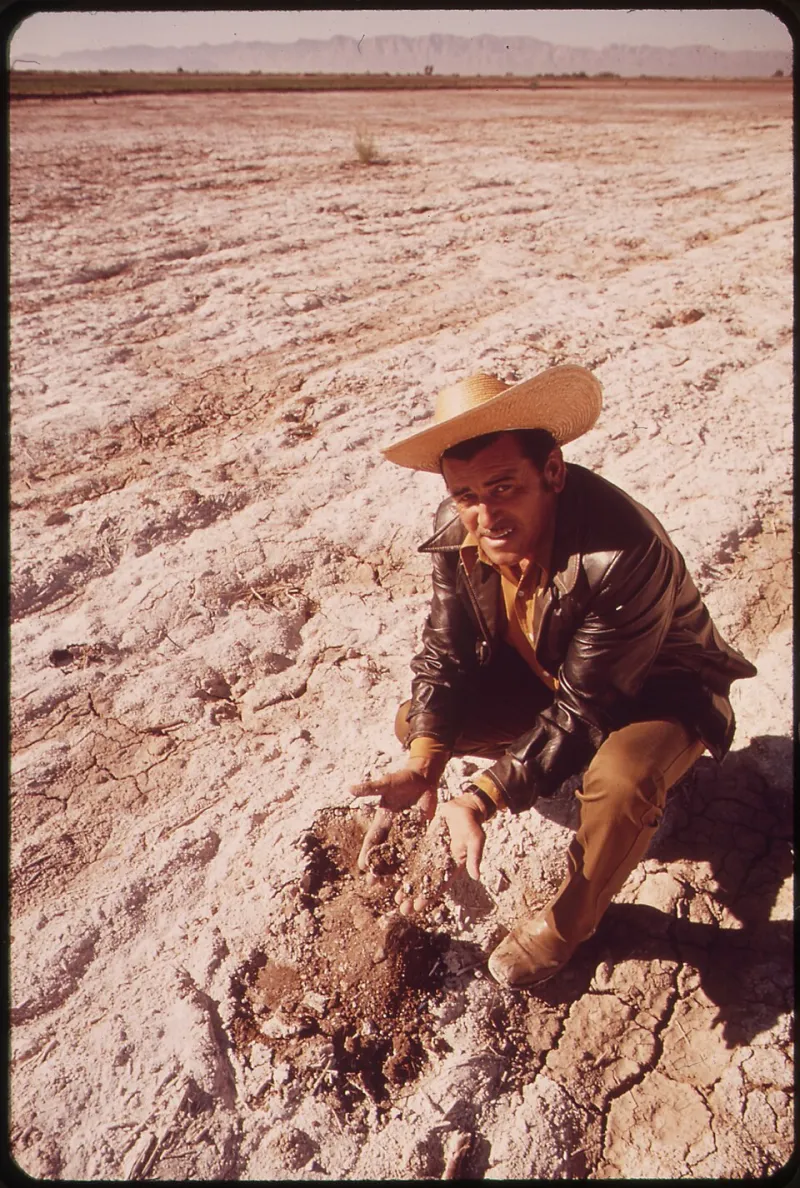
Photo: Charles O'Rear, Public domain, via Wikimedia Commons
Get on your knees, dig out a handful of soil, and really look at it. Not a cursory glance before you toss it back — actually look. How does it smell? Does it crumble or clump? Can you see the threads of fungal mycelium, thin as spider silk, weaving between the particles? Are there earthworms, and if so, how many?
For most of American agriculture's industrial era, these questions would have seemed almost quaint. Soil was a substrate — the stuff you stuck seeds into and then fed with purchased inputs. NPK ratios on a fertilizer bag were the whole conversation.
But a growing number of farmers across the country are treating soil as something far more complex: a living ecosystem, a biological community, a kind of language that — if you learn to read it — tells you almost everything you need to know about the health and future of your farm.
Beyond the Soil Test
The standard soil test — send a sample to a lab, get back a report on pH, nitrogen, phosphorus, and potassium — has been the backbone of American farm management for generations. It's useful. But a lot of regenerative farmers will tell you it only captures a fraction of what's actually happening underground.
"A basic soil test tells you what nutrients are present," says Marcus Webb, who farms about 240 acres of mixed vegetables and cover crops outside of Salinas, California. "It doesn't tell you whether those nutrients are biologically available, whether your soil structure can actually move water the way it needs to, or what kind of microbial community you're working with. That's where things get interesting."
Webb started experimenting with biological soil testing about five years ago, after a particularly rough season where his brassicas underperformed despite what looked like solid nutrient numbers. He sent samples to a lab that specializes in microbial analysis — a service that barely existed for small farms a decade ago — and what he got back changed how he thought about his entire operation.
"There was basically no fungal activity in certain sections of the field," he recalls. "Years of tillage and synthetic inputs had wiped out the mycorrhizal networks. The nutrients were there, but the biology to cycle them wasn't. That's not something a standard NPK test would ever show you."
The Tools Getting More Accessible
For a long time, the kind of soil science Webb is describing lived primarily in university research programs and the consulting arms of large agribusiness companies. Getting a detailed microbial soil analysis cost hundreds of dollars per sample and required relationships with specialized labs that weren't exactly advertising to small-scale growers.
That's changing. Companies like Haney Soil Health, Ward Laboratories, and a handful of newer startups are making comprehensive biological soil testing increasingly accessible and affordable. The Haney test in particular — which measures microbial respiration and biological nutrient cycling alongside traditional chemical indicators — has gained a serious following in regenerative agriculture circles for giving farmers a more complete picture of soil vitality.
But not everything requires a lab. Some of the most valuable soil health indicators are ones that farmers have been observing for centuries, and that knowledge is experiencing its own kind of revival.
Reading the Field the Old Way
At Redtail Farm in southern Minnesota, Jess and Tom Fairfax grow a diversified mix of grains, legumes, and vegetables on land that's been in Tom's family for four generations. They've been transitioning toward regenerative practices for about eight years, and while they do use biological soil testing, a lot of their most important diagnostic work happens with their eyes and hands.
"We do an infiltration test every spring," Jess explains. "You just drive a ring into the soil, pour in a set amount of water, and time how long it takes to absorb. Healthy soil with good structure and biology can take in water really fast. Compacted or biologically depleted soil just lets it puddle. It's simple, but it tells you a ton."
The Fairfaxes also track earthworm counts — a classic indicator that's fallen out of fashion in conventional agriculture but is treated as gospel in regenerative circles. "When we started, we were finding maybe two or three earthworms per cubic foot of soil in our worst fields," Tom says. "Last fall we were counting twelve to fifteen. That's not an accident. That's years of cover cropping, reduced tillage, and keeping something living in the ground as much as possible."
They've also learned to pay attention to what weeds are showing up and where. Certain weed species are strongly associated with specific soil conditions — compaction, low calcium, poor drainage — and treating them as diagnostic clues rather than just nuisances has shifted how the Fairfaxes approach field management.
"Weeds are trying to tell you something," Jess says. "Lambsquarters showing up heavy in one section of a field is basically that field asking for more organic matter. Once you start reading it that way, you see the whole farm differently."
Democratizing Agricultural Knowledge
One of the most significant things happening in the soil health movement is a genuine shift in who holds agricultural knowledge and how it gets shared. For much of the 20th century, the dominant model was top-down: university extension programs and corporate agronomists told farmers what to do, often with a strong bias toward input-heavy, high-yield conventional systems.
Regenerative agriculture has developed a much more horizontal knowledge culture. Farmers are sharing test results, field observations, and management strategies with each other through networks like the Soil Health Academy, the Rodale Institute's network, and dozens of regional farmer-to-farmer learning groups. Social media — for all its chaos — has actually been a genuinely useful tool here, with farmers posting soil tests, cover crop trials, and earthworm counts for peer feedback.
"The university extension system in a lot of states still isn't very well set up to support what we're doing," says Webb in California. "So we've built our own networks. I've learned more from conversations with farmers in Kansas and Georgia than I have from most formal agricultural education."
This democratization matters beyond just individual farm viability. As climate pressures mount — more extreme weather events, less predictable precipitation, longer droughts — the farms most likely to be resilient are the ones with healthy, biologically active soils that can buffer against stress. Building that resilience is a long-term project, and it starts with understanding what's actually happening underfoot.
The Long Game
There's no quick fix in soil health work. The farmers doing it most seriously talk in timelines of five, ten, twenty years — the kind of horizon that doesn't fit neatly into quarterly earnings reports or single-season ROI calculations. That's partly why it's struggled to gain traction in large-scale commodity agriculture, where the incentive structures are still heavily tilted toward maximum short-term yield.
But for the growing community of farmers who've committed to this approach, the results are showing up in ways that matter: lower input costs, improved drought resilience, better crop quality, and land that's genuinely more valuable — biologically and economically — than when they started.
"My grandfather farmed this land hard," Tom Fairfax says, standing in a cover-cropped field that won't be touched until spring. "I don't blame him — that's what everyone was doing. But I want to hand this farm to our kids in better shape than I got it. The soil is how you do that."
Learning to read the earth isn't a skill you develop in a season. But the farmers who've started down that road will tell you it changes how you see everything — not just your fields, but the whole complicated, beautiful system of relationships that turns sunlight and rain and living soil into food.