Follow the Dollar: What Farmers Actually Pocket When You Buy Direct
Somewhere between the field where your tomatoes were picked and the bin where you found them at a big-box grocery store, a lot of money disappeared. Not into thin air — into a layered chain of distributors, brokers, wholesalers, and retail margins that can consume anywhere from 50 to 80 cents of every dollar a consumer spends on fresh produce. The farmer at the start of that chain? They're often left fighting over what's left.
But something is shifting. Across the country, a growing number of growers are cutting that chain short — selling directly at farmers' markets, through CSA subscriptions, and via farm-stand storefronts — and the economics look radically different when they do.
What the Conventional Supply Chain Actually Costs a Farmer
Let's start with a number that tends to shock people: according to USDA data, farmers receive, on average, about 14.6 cents of every food dollar spent by American consumers. That figure covers all food, including heavily processed goods where the raw ingredient cost is naturally diluted. For fresh produce specifically, the picture varies — but rarely in the farmer's favor.
Take strawberries. A conventional California strawberry grower selling through a distributor to a major grocery chain might receive $8 to $12 per flat (roughly 8 pints). That same flat retails for $24 to $32 or more by the time it hits store shelves. After subtracting labor, inputs, packaging, and the broker's cut, many growers are operating on margins so thin that a single bad weather week can wipe out a season's profit.
"We were grossing decent money on paper but netting almost nothing," says Marcus Delray, who farms 40 acres of mixed vegetables outside Asheville, North Carolina. "Once you add up what the distributor takes, what the retailer marks up, and what we're spending on compliance and packaging just to get into those stores — we were basically working for free some years."
Delray switched to a hybrid direct model four years ago. He now runs a CSA with 180 household memberships, sells at two regional farmers' markets, and does a small amount of wholesale to local restaurants. His gross revenue per acre has increased by roughly 60%, and his net margin has more than doubled.
The Farmers' Market Math
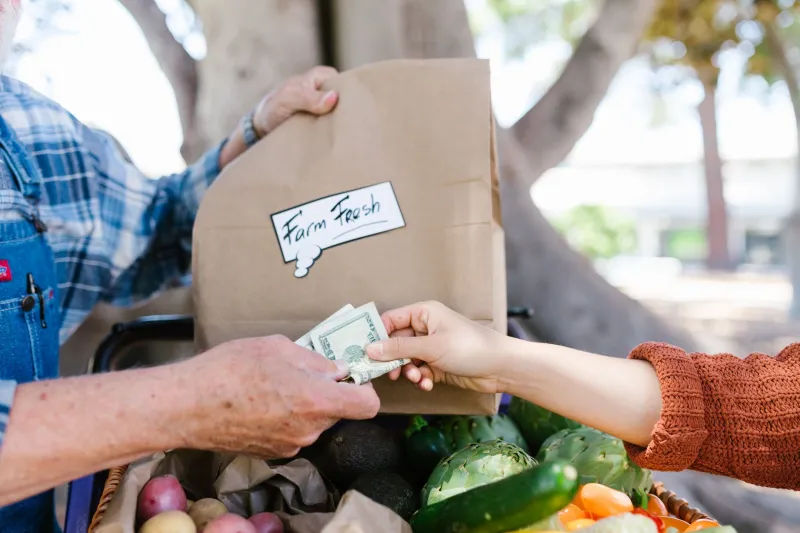
The arithmetic of direct-to-consumer sales is almost uncomfortably straightforward. When a farmer sells a $5 bag of salad greens at a market, that $5 — minus whatever the market charges in vendor fees, typically 6 to 10% — goes directly to them. No broker. No distribution markup. No retailer margin.
Market vendor fees aside, farmers selling direct typically capture 70 to 90 cents of every consumer dollar, compared to the 15 to 30 cents they might see through conventional channels.
That doesn't mean farmers' markets are a guaranteed goldmine. There are real costs: the time to staff a booth, transportation, display materials, and the simple reality that a market stand can only move so much volume in a few hours on a Saturday morning. Scaling direct sales takes work.
But for smaller operations — the 50-to-200-acre family farms that form the backbone of regional food systems — the math often pencils out strongly in favor of going direct, even at lower total volume.
Sofia Reinholt grows specialty herbs and edible flowers on 12 acres in the Willamette Valley in Oregon. She sells almost exclusively at two Portland-area farmers' markets and through a small online farm store. "I'm not moving the volume that a wholesale account would," she says, "but I'm making more per pound than I ever did when I was selling to a distributor. And I actually know my customers. That's not nothing."
CSA Models: Locking In Revenue Before the Season Starts
Community Supported Agriculture — the subscription model where households pay upfront for weekly boxes of produce throughout the growing season — takes the direct model a step further. Farmers receive payment before they've planted a single seed, which fundamentally changes the financial risk equation.
For James and Priya Okonkwo, who operate a 30-acre organic vegetable farm outside Madison, Wisconsin, their 220-member CSA represents about 65% of their annual revenue. "We know in February what our floor is going to be for the season," James explains. "That's huge. It means we can invest in the farm, take some risks with new crops, and not be lying awake in August wondering if we'll cover payroll."
The Okonkwos price their CSA shares to reflect actual production costs plus a living wage for themselves and their two full-time employees. "When you're selling wholesale, you're basically accepting whatever price the market sets, and that price almost never accounts for what it actually costs to grow food responsibly," Priya says. "With CSA, we set the price. It's a completely different relationship with money."
Across different farms and regions, CSA pricing typically yields farmers $1.50 to $2.50 per pound of mixed produce — significantly above the $0.40 to $0.80 per pound that wholesale vegetable contracts often pay.
The Hidden Costs That Complicate the Picture
Fair accounting requires acknowledging the real friction in direct sales. Farmers who go direct are also taking on roles they didn't sign up for: marketing, customer service, bookkeeping, and logistics. Time spent at a market booth or managing CSA logistics is time not spent farming.
"I love the market, but I'm there from 6 a.m. to 2 p.m. every Saturday," says Delray. "That's a full workday that I'm not in the field. You have to factor that in."
There's also the question of access. Farmers' markets skew toward higher-income urban and suburban areas, which raises legitimate equity questions about who benefits from the direct-sale premium. Efforts to expand SNAP acceptance at markets and establish community-supported agriculture programs in lower-income zip codes are growing, but the gap remains real.
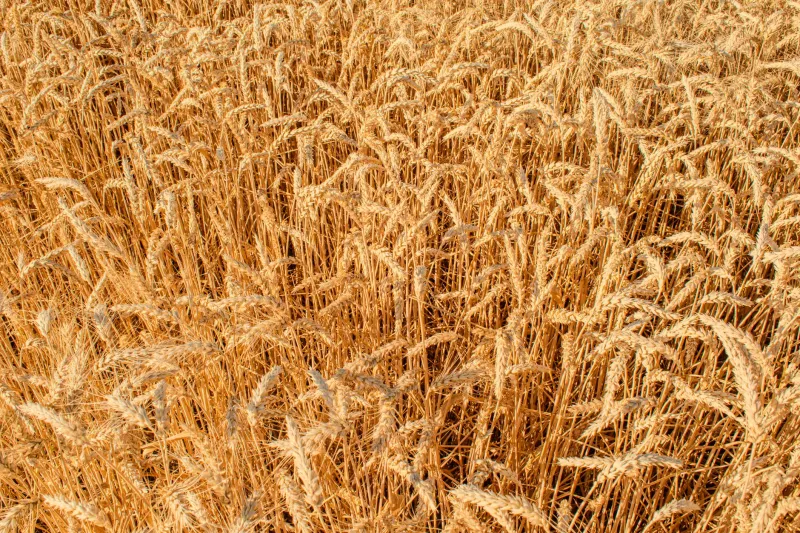
And not every crop translates easily to direct sales. Commodity grains, for instance, are structurally dependent on large-scale processing and distribution infrastructure. A wheat farmer in Kansas can't easily sell bushels at a Saturday market.
Why This Matters Beyond the Farm
The conversation about farm-gate economics isn't just about who profits — it's about what kind of food system we're building. Farms that can capture a fair price for their products are farms that can afford to invest in soil health, pay workers decently, and stay in operation for the long haul. Farms squeezed to the edge of viability cut corners, consolidate, or disappear entirely.
When you buy directly from a farmer, you're not just getting fresher food — and you are getting fresher food, full stop — you're participating in a financial structure that actually sustains the people growing it. That $4 bunch of kale isn't just kale. It's a vote for a food system where the person who grew it can afford to keep growing.
The farmers we talked to aren't naive about scale. They know direct sales can't replace the entire conventional food system tomorrow. But they also know what their bank accounts looked like before and after they started selling direct. And that math, they'll tell you, speaks for itself.