From Schoolyard to Salad Bar: The Districts Farming Their Own Lunch Lines
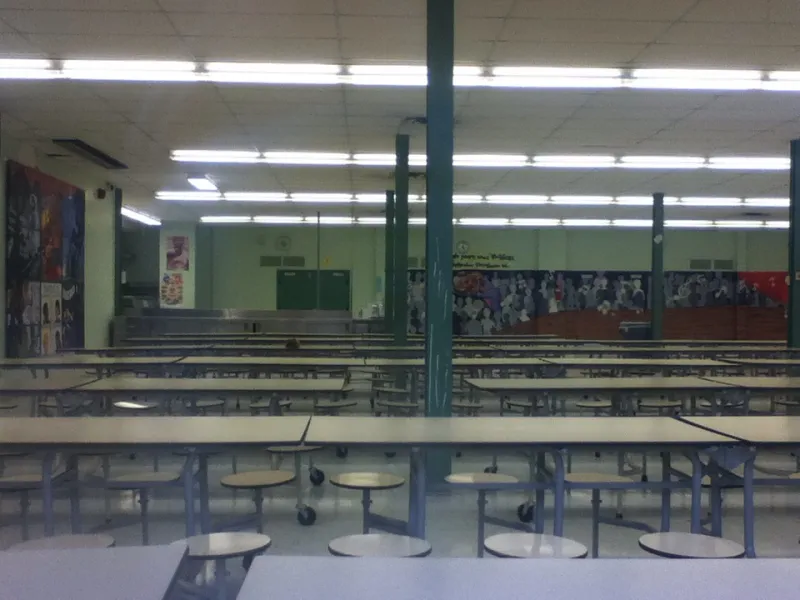
Photo: FreshCorp619, CC BY-SA 4.0, via Wikimedia Commons
The first decision of the school year doesn't happen in a classroom. It happens in March, in a conference room, when the food service director for Ridgeline Unified opens a seed catalog and starts planning what 3,400 students will eat in October.
"You plant backward from the tray," she told me, tapping a page of butternut squash. "If I want roast squash on the line the second week of October, somebody's putting seed in the ground the last week of May. During finals."
Ridgeline is one of a small but growing number of districts across the country—stretching from Vermont's farm-to-school grants to California's seasonal produce mandates—that have signed multi-year contracts with nearby farms or, in a handful of bolder cases, started growing food on district-owned land. The idea sounds simple. The execution is anything but.
A School Calendar Runs on a Farm Calendar
Here's the core tension: schools run on a September-to-June schedule, and farms run on, well, the sun. Peak harvest in most of the country lands in late August and September—exactly when cafeteria staff are being retrained, freezers are being inventoried, and nobody has time to process 800 pounds of tomatoes.
Districts that make it work plan around this. Ridgeline contracts with a farm twenty minutes away for crops that either store well (winter squash, potatoes, cabbage) or freeze beautifully (sweet corn, blanched greens). The farm plants in spring with a guaranteed buyer. The district gets predictable pricing for three years, which, in a world of volatile commodity food costs, is its own kind of harvest.
"The contract is the whole thing," the farm's owner said. "I can't plant for a customer who might vanish after one bad budget meeting. Three years changes what I'm willing to put in the ground."
The Tuesday Squash Problem
Then there's the logistics, which is where most romantic visions of farm-to-school go to die.
Picture it: 2,000 servings of butternut squash due Tuesday. Whole squash arrives Friday on a pallet. Somebody—a cook named Denise, in this case, who has worked the line for nineteen years—has to peel and cube all of it. By hand. Because the district's food processor broke in 2019 and the replacement is still "in the budget conversation."
Denise has a system. She watches cooking competition shows and applies the knife skills. But she'll also tell you, flatly, that farm-to-school runs on labor that nobody budgets for. Peeling squash is not in anyone's job description. It's just in everyone's week.
The districts that succeed treat kitchen staff as skilled workers, not reheaters. Some have invested in processing equipment through state grants. A few partner with regional food hubs that do the chopping. Others, honestly, just lean on Denises. All of them will tell you the same thing: the food is the easy part.
Picky Eaters, Meet Kohlrabi
And then there's the customer base, which is nine years old and has strong opinions.
The trick, veteran food service directors say, is never leading with the weird stuff. Kale went onto Ridgeline's line inside a smoothie before it ever appeared as a salad. Roasted root vegetables got rebranded by the students themselves as "farm fries." A fifth grader who helped plant the sweet potatoes in the district's own garden plot will, statistically, eat the sweet potatoes. Participation in garden-planted crops runs measurably higher than in anything contracted from outside—a fact that has convinced more than one skeptical school board member.
Can It Survive the Budget?
Every farm-to-school program has a story about nearly dying. Ridgeline's came two years ago, when a proposed cut would have ended the farm contract and returned the district to commodity pallets. Parents showed up to the board meeting with squash. Actual squash. It stayed.
The honest accounting: local produce costs more per serving than commodity food, sometimes by a lot. But the full ledger is complicated. Federal programs now reimburse extra for local purchases in many states. Waste drops when kids actually eat the food. And a guaranteed institutional buyer is keeping at least one family farm solvent in a county where three others have sold to developers this decade.
Whether farm-to-school becomes infrastructure or stays a boutique experiment depends on whether we fund it like infrastructure. The seeds, as it turns out, are the easy part.