Before the First Tomato Sells: One Saturday Morning with the Market's 4 A.M. Crew
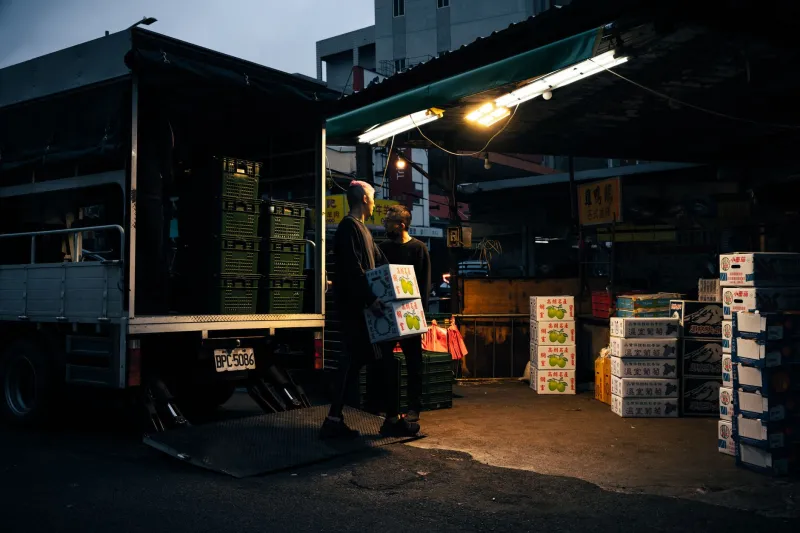
The parking lot at Fourth and Cedar is empty at 4:07 a.m., except for a pickup truck idling near a fire hydrant with its hazards blinking. Dana Okafor, who runs the Riverbend Farmers Market in a mid-sized Midwestern city, steps out with a thermos of coffee and a clipboard that looks like it's survived a decade of Saturdays.
"People think the market starts at eight," she says, popping the tailgate. "It starts here. It starts in the dark."
The Two-Hour Ballet
By 4:30, the lot fills fast. Trucks back in by assigned slots — a system Okafor maps out each winter, and one that has ended more than one friendship, temporarily. The flower grower from the county line gets the corner booth because her buckets need morning shade. The mushroom guy parks near the tree line. The dairy van, heaviest and slowest to leave, gets the spot closest to the exit.
"It's Tetris," Okafor says. "Except the pieces have opinions."
Canopies snap open one by one, sounding like a round of applause. Crates of greens, still cold from the field, stack into displays. A baker unloads lidded trays of sourdough that rose while most of the town was asleep. The scale calibrations come next — Okafor carries certified test weights in a padded case, and every vendor's scale gets checked, stamped, and logged. It's the least glamorous part of farm-to-table and the most important: a customer paying by the pound deserves an honest ounce.
Handshakes Over Contracts
What surprises first-time vendors most isn't the labor — they're farmers, labor is the job. It's the economy of trust. Booth assignments, shared refrigeration, the borrowed dolly, the neighbor who watches your table while you run to the ATM: almost none of it is written down.
"A market is a village that assembles and disassembles every week," says Miguel Serrano, third-generation operator of a 12-acre vegetable farm an hour out. He's been selling at Riverbend for nine years. "The handshake is the contract. You break it once, everybody knows by Sunday."
That informal economy has real stakes. A corner booth on a Saturday can mean the difference between a profitable season and a break-even one. Vendors who show up late, short, or with produce that doesn't match what they promised find their slot drifting toward the parking lot's far edge — a quiet demotion no one announces but everyone understands.
The Politics of the Corner Booth
Corner booths are the waterfront real estate of the market world. Foot traffic splits at corners; shoppers linger there. Okafor rotates the best spots seasonally and factors in seniority, product mix, and — she admits — who needs the boost. The young flower farmer in her second year gets the corner in June, peak peony season, partly because "peony people buy everything else too."
There are complaints. There are always complaints. Okafor handles them the way she handles everything: with a clipboard, a spreadsheet, and a firm belief that transparency beats popularity.
Why the Dark Hours Matter
By 7:45, the transformation is complete. The lot has become a commons — 40 vendors, string lights off, tables dressed, tomatoes arranged by color like a paint store. Shoppers arriving at eight see abundance. What they don't see is the two-hundred-person work shift that made it happen: the loading, the weighing, the diplomacy, the coffee.
Every dollar spent at a farmers market passes through this invisible morning. And the folks in the 4 A.M. Club wouldn't have it any other way — though most will tell you, as Okafor does while watching the first customer of the day approach a table of strawberries, that they'd also appreciate it if more people understood one thing:
"The market didn't just appear. Somebody built it. This morning. Again."