Cold Weather's Secret: Why Winter Farmers' Market Vegetables Blow Summer's Out of the Water
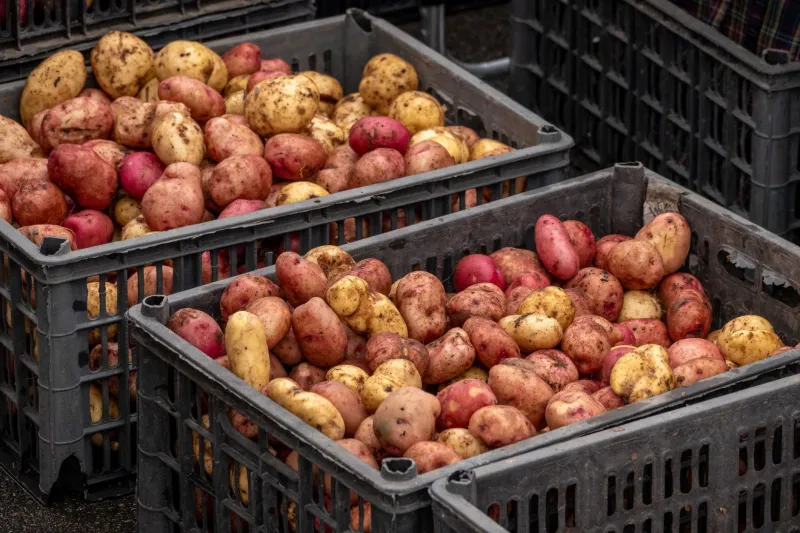
There's a moment every November, standing at a farmers' market stall somewhere between the fingerling potatoes and a pile of purple-topped turnips, when you bite into something and stop mid-chew. Not because it's exotic or Instagram-worthy. Because it's sweet. Genuinely, almost startlingly sweet — in a vegetable you'd normally describe as "earthy" at best.
That moment isn't an accident. It's chemistry, timing, and the quiet genius of farmers who've learned to work with cold rather than fight it.
The Sugar Rush Your Vegetables Are Running From
When temperatures drop, something remarkable happens inside root vegetables, brassicas, and certain leafy greens. The plant, sensing frost, begins converting stored starches into sugars — a biological antifreeze response that lowers the freezing point of cellular fluid and keeps ice crystals from destroying plant tissue.
The result, for us, is flavor.
A parsnip harvested after two or three hard frosts tastes nothing like the same variety pulled in September. Kale gets sweeter, more tender, almost nutty. Carrots develop a depth that summer versions rarely match. Brussels sprouts — famously polarizing — lose much of their bitterness and take on a caramel-adjacent richness that converts skeptics at dinner tables across the country every winter.
"People always ask me why our fall carrots taste so different," says Dani Kurowski, who farms about forty acres of mixed vegetables outside Madison, Wisconsin. "I tell them: the carrot is trying to survive. And that survival instinct is basically flavor."
Kurowski deliberately staggers her carrot plantings so that her last succession hits harvest right as nighttime temps are consistently dipping into the low thirties. It requires careful calculation — too early and you miss the frost-sweetening window, too late and the ground freezes before you can pull them. But when you time it right, she says, the difference is undeniable.
Slower Growth, More Concentrated Everything
Beyond the frost-sugar conversion, there's another factor working in winter produce's favor: pace.
Summer vegetables grow fast. Aggressively, sometimes almost comically fast — zucchini famously goes from elegant to baseball bat in forty-eight hours. That speed is driven by heat, long days, and the plant's urgency to reproduce before conditions change. But rapid growth dilutes. Water uptake surges, cell walls expand quickly, and the ratio of flavor compounds to overall volume drops.
Cold slows everything down. A winter squash or storage beet sitting in cooling soil isn't rushing anywhere. It's concentrating. The sugars, acids, and volatile aromatic compounds that translate to taste in your mouth have more time to accumulate relative to water content. You're essentially getting a more edited, more intentional vegetable.
Nutrient density follows a similar logic. Several studies, including research from the University of California Cooperative Extension, have found that certain cold-season crops — particularly kale, spinach, and other leafy brassicas — show higher concentrations of vitamins C and K, as well as antioxidants, when harvested in cooler conditions. The plant invests more metabolic energy into chemical compounds when it's stressed by cold, and many of those compounds happen to be exactly what we're looking for nutritionally.
Pest Pressure: The Invisible Advantage
Here's something that doesn't make it onto produce labels but matters enormously to flavor: what the plant wasn't fighting.
Summer crops are under siege. Aphids, caterpillars, beetles, fungal spores, bacterial blight — the warm months are peak season for every organism that wants to eat your vegetables before you do. Plants respond by producing defensive compounds, some of which are bitter or astringent. Farmers, even organic ones, are managing pest pressure constantly.
By late fall, most of those pressures have collapsed. Insect populations die back, fungal activity slows, and the field quiets down in a way that lets plants just be vegetables rather than constantly mounting chemical defenses. The flavor profile that emerges is cleaner, less complicated by stress responses.
"Summer tomatoes get all the glory, and I love them, don't get me wrong," says Marcus Thibodeau, a diversified vegetable farmer in Vermont's Northeast Kingdom. "But I'd put my October storage onions or my November celeriac up against anything I grow in July. There's a cleanness to the flavor that you just can't replicate in the heat."
Thibodeau has reorganized a significant portion of his farm around cold-season production over the past several years, partly for flavor and partly for economics. Winter farmers' markets in his region have grown substantially, he says, and customers who show up in January are serious buyers — they're not browsing, they're stocking up.
What to Actually Buy (and When)
Not every vegetable benefits equally from cold-season harvesting, so it's worth knowing where to focus your attention.
Root vegetables are the undisputed stars. Carrots, parsnips, turnips, beets, and celeriac all hit peak flavor after a few frosts. If you're buying these at a summer market, you're getting a preview. The full performance is in November and December.
Brassicas — kale, Brussels sprouts, cabbage, kohlrabi, and broccoli raab — transform dramatically in cold. The bitterness mellows, sweetness emerges, and the texture often becomes more tender rather than tougher. Winter kale is a genuinely different ingredient than its August counterpart.
Storage crops like winter squash, garlic, and dry beans actually benefit from curing and storage time, meaning the flavor you get in January from a well-stored butternut squash may be richer than what you'd get at harvest in September. Farmers who know how to cure and store are delivering a better product months after the field work is done.
Alliums — onions, shallots, leeks — develop more complex, layered flavor with cold exposure and proper storage. A late-season leek has a sweetness that earlier harvests rarely achieve.
Rethinking the Peak Season Myth
We've been culturally conditioned to think of summer as the pinnacle of produce season. The tomato. The corn. The peach. And those things are real — there are summer crops that genuinely peak in heat and abundance. Nobody's arguing that a January tomato competes with one from July.
But the assumption that summer is universally better has led a lot of eaters to tune out of farmers' markets from October through April, and that's a genuine loss. The farmers who are showing up in the cold months — setting up their tents in the parking lots of community centers and church halls, hauling crates of root vegetables and braising greens and storage squash — are bringing some of the most flavorful, nutrient-dense produce of the entire year.
They've just been undersold.
"I wish more people understood that winter vegetables aren't a consolation prize," Kurowski says. "They're a different kind of peak. It's just a quieter, colder, more delicious one."
So the next time you're tempted to hibernate your farmers' market habit along with your garden, consider this: the carrots waiting for you in December have been through something. They've felt the frost, converted their starches, slowed down and concentrated everything worth tasting. They've earned it.
Go find them.