Ancient Grains, Modern Loaves: The Farmers and Bakers Rewriting the Rules of American Wheat

Photo by Photo by Mila on Unsplash on Unsplash
There's a loaf of bread sitting on a bakery counter in Asheville, North Carolina that will stop you cold. It's dense but not heavy, with a crackly crust and a crumb that smells faintly of hazelnuts and honey. No additives, no dough conditioners, no enriched flour from a commodity silo. Just stone-milled einkorn wheat grown on a small farm in the Piedmont and the kind of slow fermentation that takes patience most commercial bakeries simply can't afford.
That loaf is the end product of a supply chain that barely existed a decade ago — one that's being stitched together, farm by farm, mill by mill, by people who believe American wheat went badly wrong somewhere around the middle of the 20th century and that fixing it starts with going way, way back.
What We Lost When Wheat Got 'Efficient'
Here's the short version of a long, complicated story: modern commodity wheat was bred almost entirely for yield and uniformity. Varieties like the now-dominant hard red winter wheat were selected because they grow fast, stand up to heavy machinery, and produce consistent protein levels that industrial bakers can work with at scale. What got quietly left behind in that process was flavor, nutritional complexity, and the kind of genetic diversity that makes a crop ecosystem resilient.
Heirloom and ancient grain varieties — einkorn (one of the oldest cultivated wheats on earth), emmer, spelt, Red Fife, Turkey Red, and dozens of regional heritage wheats — were never bred for industrial efficiency. They're often lower-yielding, shorter, and harder to harvest at scale. But they carry something commodity wheat lost: a flavor profile that actually tastes like something.
"When people first taste bread made from real einkorn, a lot of them think something's been added," says a grain farmer in the Willamette Valley of Oregon who started transitioning fields to heritage varieties five years ago. "They'll ask what's in it. The answer is nothing. That's just what wheat used to taste like."
The Farms Doing the Hard Work
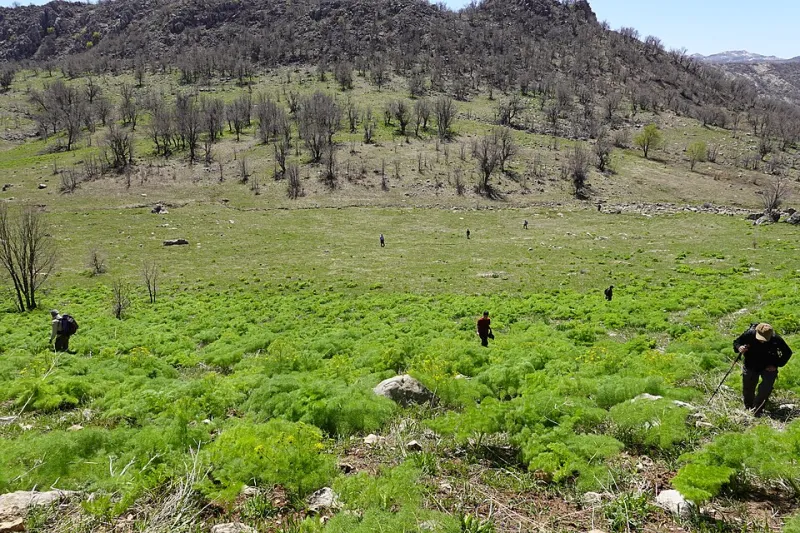
Growing heirloom grains isn't a romantic hobby project. It's genuinely difficult agriculture. Many ancient varieties are tall and prone to lodging — that's the term for when stalks fall over before harvest, which can wipe out a crop. Yields per acre are often 30 to 50 percent lower than commodity wheat. And because the market for these grains is still relatively small, farmers carry real financial risk.
What's changing is that a network of support is slowly forming around them. Regional grain economies — sometimes called "grain sheds" — are emerging in places like the Hudson Valley in New York, the Skagit Valley in Washington state, and the Piedmont of the Carolinas. These informal networks connect small-scale grain farmers with stone mills, craft bakeries, and increasingly, direct-to-consumer buyers who want to know exactly where their flour came from.
Organizations like the Bread Lab at Washington State University have been doing serious agronomic work to help farmers identify which heritage varieties are best suited to specific regional climates, essentially rebuilding the localized grain knowledge that existed before commodity agriculture homogenized everything. It's slow, painstaking work — but the results are starting to show up in farmers markets and specialty grocery shelves across the country.
Why Bakers Are Obsessed
Ask any baker who has switched to stone-milled heritage wheat flour and you'll hear a version of the same story: working with it is harder at first, and then it becomes something they can't imagine giving up.
Heirloom and ancient grain flours behave differently than commodity flour. They often absorb water differently, ferment at different rates, and produce doughs that require more attention and intuition. The gluten structures in many ancient wheats — particularly einkorn — are also structurally distinct from modern wheat, which is why some people who experience discomfort with conventional wheat report tolerating these older varieties better (though it's worth noting this isn't the same as being safe for people with celiac disease).
But the flavor. That's what keeps bakers coming back. Einkorn brings a buttery, almost sweet nuttiness. Emmer has an earthier, more mineral quality. Spelt sits somewhere in between, with a mild sweetness and a slight tang that plays beautifully with long fermentation. Red Fife, a Canadian heritage wheat that's found a devoted following among American artisan bakers, has a rich, almost biscuit-like depth that makes extraordinary sandwich bread.
"I feel like I actually have ingredients to work with now," says one Portland-based baker who sources exclusively from Pacific Northwest grain farms. "With commodity flour, you're basically starting from neutral. With these grains, the flavor is already there. My job is just not to mess it up."
The Home Cook Angle
Heirloom grain flour is increasingly accessible for home bakers, though you may need to shop beyond your standard grocery store. Small mills like Anson Mills in South Carolina, Janie's Mill in Illinois, and Camas Country Mill in Oregon ship directly to consumers, and a growing number of natural food stores and co-ops stock regional stone-milled options.
Switching entirely to ancient grain flours takes some adjustment. A few practical tips if you're diving in:
- Start with a blend. Swapping 25 to 30 percent of all-purpose flour with einkorn or spelt in your existing recipes is a low-stakes way to start noticing the flavor difference without dramatically changing the texture of your baked goods.
- Hydration matters. Many whole-grain heirloom flours absorb liquid differently. Give your dough a few extra minutes of rest after mixing to let the flour fully hydrate before you decide it needs more water.
- Fermentation is your friend. These flours shine brightest in long, slow ferments. Even a simple overnight cold ferment on pizza dough or a quick bread batter will develop flavors that shorter timelines can't produce.
- Buy whole grain when you can. The nutritional and flavor benefits of ancient grains are most concentrated in the bran and germ — components that get stripped out in refined flour. Whole grain stone-milled flour keeps all of that intact.
More Than a Trend
It would be easy to file the heirloom grain movement under "artisan food trend" and move on. But there's a more serious argument being made here, one that connects directly to questions about agricultural resilience and food system sustainability.
Monoculture commodity wheat — vast acreages planted to a handful of genetically similar varieties — is inherently vulnerable. A new pathogen, a climate shift, a single bad season can devastate crops with no genetic diversity to fall back on. Maintaining a broader portfolio of grain varieties, including the old ones, is essentially an insurance policy for the food system. The farmers growing einkorn and Turkey Red aren't just chasing flavor — they're participating in the preservation of genetic material that could matter enormously in a warming, unpredictable climate.
That loaf of einkorn bread in Asheville? It tastes like something worth protecting.
And that might be the most important thing about it.