Moving Cattle, Mending Land: The Ranchers Who Are Quietly Rewriting How America Raises Meat
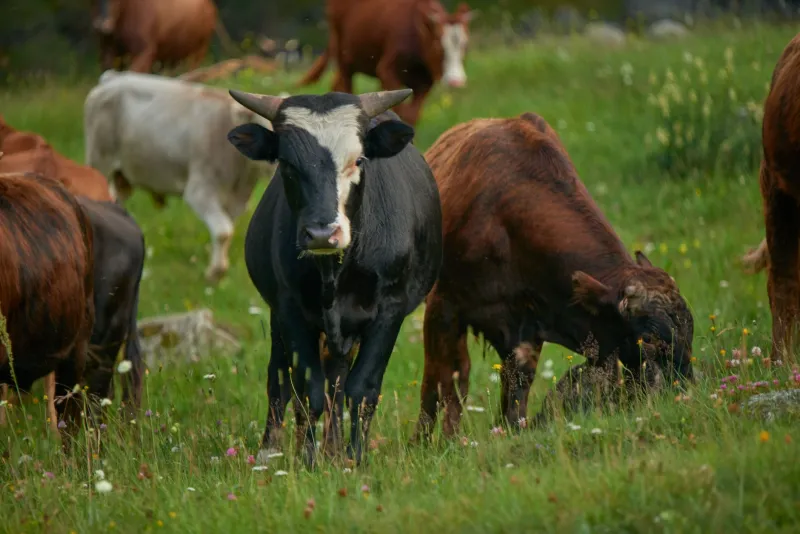
Drive through the industrial beef corridor of the Texas Panhandle on a hot August afternoon and you'll see what decades of conventional ranching looks like from the road: cracked, pale earth, sparse clumps of the same two or three grass species, cattle standing shoulder-to-shoulder near a water trough, barely a tree in sight. Now drive three hours south to a ranch outside Fredericksburg, where a fifth-generation rancher named Marcus Holloway has been doing something radically different for the past eight years. His pastures are a riot of mixed grasses, wildflowers, and native forbs. The soil is dark, spongy underfoot, and teeming with earthworms. His cattle look calm, unhurried, and fat on nothing but what's growing beneath their hooves.
The difference between those two landscapes isn't luck or rainfall. It's a practice called rotational grazing — and it might be the most quietly transformative thing happening in American agriculture right now.
The Problem With Letting Cattle Just... Wander
For most of the twentieth century, the dominant model for beef and dairy production in the US was pretty simple: put the animals in a pasture, give them access to the whole thing, and let them eat. It seemed logical. It was also, it turns out, a slow-motion disaster for the land.
When cattle have continuous access to the same ground, they overgraze the plants they prefer and ignore the rest. Favored grasses never get a chance to recover, their root systems weaken, and eventually they die out. Bare patches form. Rain hits exposed soil and runs off instead of soaking in. Carbon escapes into the atmosphere. The land degrades, sometimes over decades, sometimes faster.
"My grandfather thought he was doing everything right," Holloway says, leaning against a fence post while a group of about sixty Angus cross cattle graze maybe two hundred yards away. "He just didn't know what continuous grazing was doing underground. Nobody was talking about it."
What Rotational Grazing Actually Looks Like
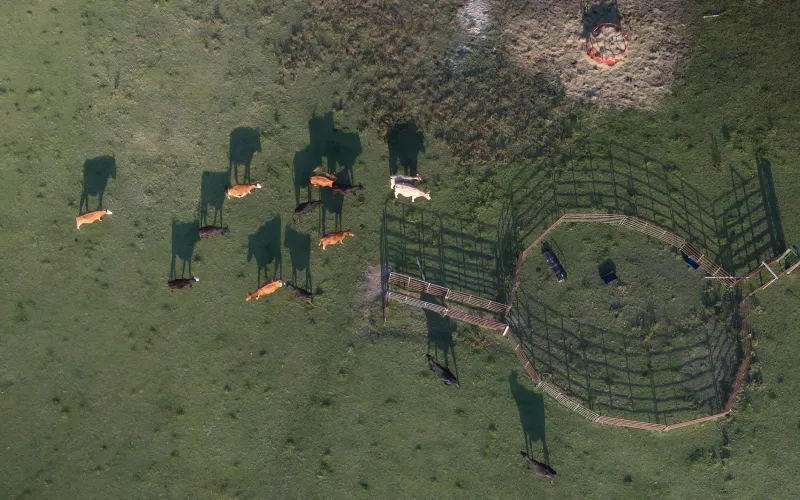
The basic concept is deceptively simple: divide your land into sections, move your animals through those sections on a schedule, and let each section rest and recover before the cattle come back. In practice, it looks like a kind of slow, deliberate dance between farmer and herd.
Holloway has divided his 1,400 acres into 47 paddocks using temporary electric fencing. His cattle spend anywhere from one to four days in each paddock before he moves them on, depending on the season, the current grass growth, and what the land tells him it needs. Some paddocks rest for as little as 30 days in peak growing season; others get 120 days or more in dry stretches.
"You're basically mimicking what bison used to do naturally," he explains. "They'd move through, graze intensively, trample some stuff, drop manure, and then they were gone for months. The land had time to breathe."
That trampling piece is important and often counterintuitive. Hooves pressing plant matter and manure into the soil surface actually accelerates decomposition and feeds soil microbes. Those microbes build organic matter. Organic matter holds water, sequesters carbon, and feeds the next generation of plants. It's a feedback loop — and once you get it spinning in the right direction, the land starts healing itself.
The Science Behind the Hoofbeats
Researchers at institutions like the Savory Institute, the Rodale Institute, and several land-grant universities have been documenting what ranchers like Holloway have been observing firsthand for years. The data is striking.
Properly managed rotational grazing has been shown to increase soil organic carbon by as much as 30% over a decade compared to continuous grazing. Biodiversity of plant species can double or triple within a few years of implementation. Water infiltration rates — how quickly rain soaks into the soil rather than running off — improve dramatically, which matters enormously in drought-prone regions across the American West and Southwest.
There's also growing evidence around the nutritional profile of meat and dairy from rotationally grazed animals. Grass-finished beef from diverse pastures consistently shows higher levels of omega-3 fatty acids, conjugated linoleic acid (CLA), and fat-soluble vitamins like E and K2 compared to grain-finished or even continuously grazed counterparts. The animals are eating a wider variety of plants, and that diversity shows up in what you put on your plate.
"It's not just about the environmental stuff, though that matters enormously," says Dr. Lena Carver, a rangeland ecologist based in Colorado who consults with ranching operations across the Mountain West. "The food quality argument is real. You are literally what your food ate."
Ranchers Doing the Work
Holloway isn't alone. Across the country, a loosely connected network of ranchers — some linked through organizations like the Savory Institute's Land to Market program, others who found their way here through personal experimentation or mentorship — are implementing variations of this approach.
In Montana, a couple named Deb and Colt Reyes converted their 900-acre family operation to a mob-grazing system (a higher-density, shorter-duration version of rotational grazing) six years ago after a brutal drought nearly wiped them out. Their water table has since risen measurably. They've reintroduced native grasses that hadn't grown on the property in living memory.
In Georgia, a small dairy operation run by a woman named Priya Anand is rotating her mixed herd of Jerseys and Guernseys through silvopasture — a system that integrates trees into the pasture design, adding shade, biodiversity, and additional carbon sequestration. Her milk tests for nutrient density that her buyers, a network of small cheese makers and direct consumers across the Southeast, say they can actually taste.
"People keep asking me what I do differently," Anand says. "I tell them I just try to let the land do most of the work. My job is mostly to get out of its way at the right times."
The Honest Challenges
None of this is easy or cheap to implement, and it's worth being straight about that. Fencing costs are significant. The management intensity is real — you can't just set up a rotational system and walk away from it. It requires constant observation, adjustment, and a willingness to let go of the idea that a tidy, uniform pasture is a healthy one.
There's also the transition period. In the first one to three years of switching to rotational management, some ranchers see a temporary dip in carrying capacity as the land adjusts. That's a hard financial reality when margins in beef and dairy are already razor-thin.
And the broader market hasn't fully caught up. Most meat processing infrastructure in the US is still built around commodity-scale conventional production. Small and mid-sized regenerative ranchers often have to build their own supply chains — direct-to-consumer sales, CSA-style meat shares, relationships with independent butchers and restaurants — which takes time and hustle.
Why It Still Matters Deeply
Here's the thing, though: the land under American ranches covers an almost incomprehensible amount of acreage. Roughly 800 million acres of the continental US is classified as rangeland. If even a meaningful fraction of that land shifted toward regenerative management, the ecological impact would be enormous — in carbon sequestration, water cycle restoration, and biodiversity recovery.
The ranchers doing this work aren't waiting for policy to catch up, or for the big commodity buyers to change their purchasing standards, or for consumers to perfectly understand what "regenerative" means on a label. They're just moving their cattle, watching their grass grow back thicker, and quietly rebuilding something that industrial agriculture spent a century taking apart.
Back in Fredericksburg, Holloway opens the gate to move his herd into the next paddock. The cattle file through calmly, heads dropping almost immediately to the fresh grass. Behind them, the paddock they've just left looks rough — grazed down, hoof-churned, dotted with manure. In six weeks, he says, it'll be the lushest section on the property.
That's the whole bet. Mess it up on purpose, then let it come back stronger than before. Turns out that's not a bad philosophy for a lot of things.