Cows That Heal the Earth: The Ranchers Using Livestock to Bring Dead Soil Back to Life
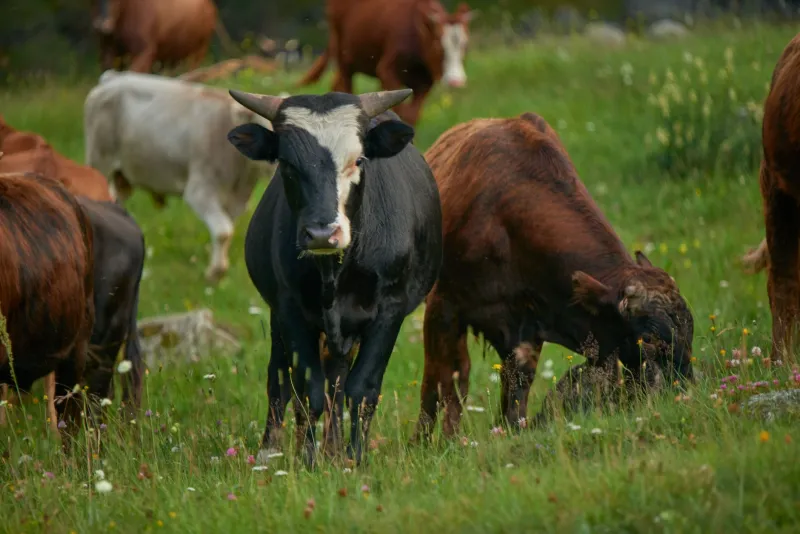
There's a version of this story you've probably heard before: livestock farming destroys land, accelerates climate change, and leaves behind compacted, carbon-depleted soil that takes decades to recover. And honestly? For a lot of conventional operations, that story is accurate. But spend a few hours talking to ranchers who've gone regenerative, and a very different picture starts to emerge — one where cattle aren't the problem, but part of the solution.
It sounds almost too good to be true. Move the herd at the right time, let the grass recover, repeat. But the science behind rotational grazing is surprisingly solid, and the results showing up on farms across the American West, Midwest, and South are hard to argue with.
What "Regenerative" Actually Means on the Ground
The word gets thrown around a lot these days — on packaging, in marketing copy, in well-meaning Instagram captions. But regenerative agriculture, at its core, is about one thing: putting more back into the land than you take out. For ranchers practicing managed rotational grazing, that means mimicking the movement patterns of wild ruminant herds that shaped North America's grasslands for thousands of years.
Think bison. Before European settlement, massive herds moved constantly across the Great Plains, grazing intensively in one spot and then moving on — giving the land time to recover, root systems to deepen, and soil microbes to flourish. Managed rotational grazing essentially recreates that rhythm with modern cattle.
Ranchers divide their pastures into smaller paddocks, moving herds every few days — sometimes every 24 hours — before the grass gets grazed below a certain height. The animals' hooves break up compacted soil, their manure feeds microbial life, and the grasses, stimulated by grazing, push their roots deeper to access water and nutrients. Over time, that deeper root system becomes a carbon pump, pulling CO2 out of the atmosphere and storing it underground.
It's not magic. It's ecology working the way it was designed to.
The Numbers That Are Turning Heads
Ranchers who've been practicing rotational grazing for five or more years are starting to see measurable shifts in their soil health data — and those numbers are getting attention beyond the farming community.
Organic matter content, one of the key indicators of soil health and carbon storage, has climbed on some regenerative operations from below 1% to 4% or higher over the course of a decade. That might sound like a small jump, but each percentage point of organic matter increase in an acre of topsoil represents roughly a ton of carbon pulled from the atmosphere. Scale that across hundreds of acres and you're talking about meaningful climate impact.
Biodiversity tells a similar story. Ranchers report seeing more native grass species returning, more insect activity, more bird populations — the kind of ecological complexity that's been missing from monoculture-heavy agricultural landscapes for generations. In some parts of the country, that includes the return of pollinators that haven't been spotted on those properties in years.
Water retention is another big one. Healthy, carbon-rich soil acts like a sponge, absorbing rainfall rather than letting it run off. For ranchers in drought-prone regions like the Texas Hill Country or eastern Colorado, that difference can mean the gap between a herd that survives a dry summer and one that doesn't.
The Economic Argument (Which Is Getting Harder to Ignore)
Let's be real: most ranchers aren't going to overhaul their entire operation out of environmental idealism alone. The economics have to work. And increasingly, they do — though the path isn't always straightforward.
The upfront investment in fencing and water infrastructure for rotational systems can be significant. But ranchers who've made the transition often report that their input costs drop over time. Less reliance on synthetic fertilizers, fewer vet bills (grass-fed animals on well-managed pasture tend to be healthier), and lower feed costs when pastures are productive year-round all add up.
On the revenue side, regeneratively raised beef commands a premium at market — and consumer demand is growing fast. Ranches that sell direct-to-consumer through CSA meat shares, farmers' markets, or online platforms are seeing strong returns, with customers willing to pay more for meat they can trace back to a specific farm with a verifiable land stewardship story.
Programs like the USDA's Conservation Stewardship Program and various state-level incentives are also starting to put real money behind regenerative transitions, making the financial math more accessible for smaller operations.
How to Find the Real Thing at the Meat Counter
Here's the frustrating part: "regenerative" isn't a regulated term. Anyone can slap it on a label. So how do you actually find meat that's doing what it claims?
Start with certifications, but don't stop there. The Regenerative Organic Certified (ROC) label from the Regenerative Organic Alliance is one of the most rigorous standards currently available in the US, requiring verified soil health practices, animal welfare standards, and fair labor policies. Certified Humane and Animal Welfare Approved labels at least confirm the animals had access to pasture, which is a starting point.
Better yet, buy direct. Farmers' markets, local food hubs, and farm websites often give you access to the rancher themselves — and a good producer will be more than happy to walk you through their grazing practices. Ask how often they move their herd. Ask whether they've done soil testing. Ask if they've noticed changes in their land over time. The answers tell you a lot.
Community Supported Agriculture (CSA) meat shares are another strong option. They connect you to a specific farm, often at a fair price point, and create the kind of ongoing relationship that makes accountability real.
The Bigger Picture
Rotational grazing isn't going to single-handedly reverse climate change or fix everything broken about American food systems. No single practice can. But it represents something important: proof that agriculture doesn't have to be extractive by default.
The ranchers leading this movement aren't romantics. They're pragmatists who got tired of watching their land degrade year after year and decided to try something different. What they're finding — in their soil samples, their water bills, their herd health records, and their bank accounts — is that farming with natural systems rather than against them actually works.
The land, it turns out, wants to heal. Sometimes it just needs a little help moving the herd.