Chasing the Ghost Tomato: How Industrial Farming Stole Summer's Best Flavor and Who's Bringing It Back
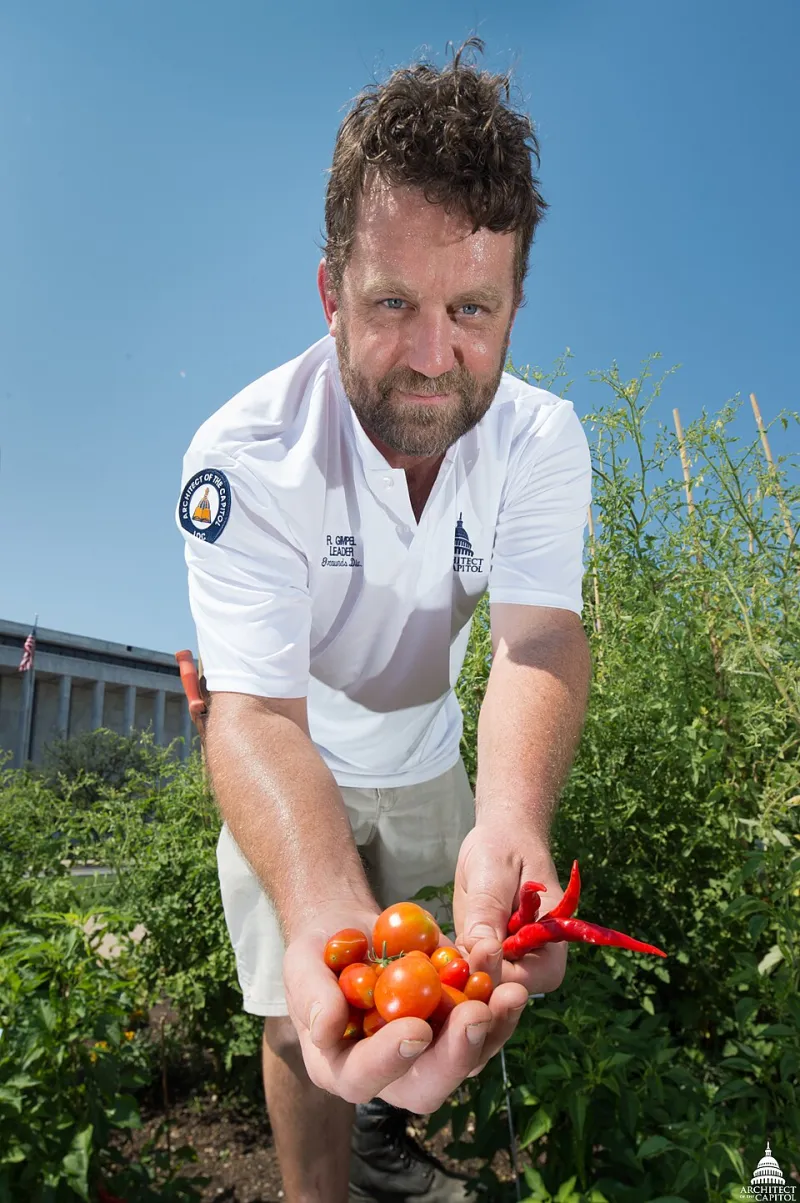
Photo: USCapitol from Washington, D.C., United States of America, Public domain, via Wikimedia Commons
Bite into a supermarket tomato in January — or honestly, most months — and you'll get the general idea of a tomato. The color is there. The shape is there. That faint, watery resistance when your teeth break through? Sure. But the flavor? The kind that makes you close your eyes and feel like you're standing in a sun-warmed garden in August? Gone. Completely, frustratingly gone.
This isn't nostalgia playing tricks on you. The flavor really did disappear. And it didn't happen by accident.
The Breeding Decision That Changed Everything
In the mid-20th century, the American tomato underwent a quiet but radical transformation. As supermarket chains expanded and the demand for consistent, shippable produce grew, agricultural breeders made a series of deliberate choices that prioritized appearance and durability over taste.
The most consequential of these was the selection for a gene mutation called uniform ripening — a trait that gives tomatoes that perfectly even, deep-red color we've all come to associate with freshness. The problem? Researchers at UC Davis discovered in 2012 that this same mutation suppresses the production of sugars and flavorful compounds in the fruit. In other words, breeders accidentally bred out the deliciousness while chasing the aesthetics.
Add to that the industry's shift toward harvesting tomatoes while still green and then exposing them to ethylene gas to trigger ripening post-transit, and you've got a fruit that looks like a tomato but performs like a prop from a movie set.
"The tomato you buy at most grocery stores was never designed to taste good," says Dr. Lena Hartwell, a food systems researcher who has spent over a decade studying sensory compounds in heirloom versus commercial varieties. "It was designed to survive a truck ride from Florida or Mexico and still look presentable under fluorescent lighting. Those are genuinely different engineering problems."
What Actually Makes a Tomato Taste Like a Tomato
Flavor in tomatoes is a surprisingly complex orchestra. It's not just sweetness or acidity — it's the interplay of hundreds of volatile compounds, many of which evaporate rapidly after harvest or get suppressed during cold storage (tomatoes should never be refrigerated, by the way, but that's a whole other conversation).
Key players include compounds like cis-3-hexenal, which delivers that grassy, green top note, and geranylacetone, which contributes floral depth. There are also carotenoid-derived volatiles that give heirloom varieties their complex, almost fruity undertones. Sugar-to-acid ratios matter enormously too — it's the balance between the two, not the raw levels of either, that creates the perception of richness.
Cold chain logistics destroy many of these volatiles before the tomato ever reaches your plate. Commercial varieties bred for thick skins and firmness tend to have lower concentrations of flavor compounds to begin with. It's a double loss — less to start with, and less surviving the journey.
The Farmers Who Refused to Let It Go
At Sunridge Family Farm outside Asheville, North Carolina, Tomás and Claire Reyes grow over 40 varieties of heirloom tomatoes on just under six acres. Their operation is deliberately small. It has to be — these tomatoes don't travel well, and that's exactly the point.
"We grow Brandywines, Cherokee Purples, Green Zebras, a few Mortgage Lifters," Claire says, walking between trellised rows heavy with fruit in various stages of ripeness. "Every single one of them tastes different. That's the whole thing. You're supposed to have a relationship with the tomato you're eating."
The Reyeses sell exclusively through farmers' markets and a small CSA. They've never tried to get into grocery stores, and they're not interested. "The moment you start thinking about shelf life, you start making compromises," Tomás explains. "And once you start compromising, you end up with what everyone's already selling."
Further west, at a small organic operation in the San Joaquin Valley, farmer Deja Williams has been working with a UC Cooperative Extension advisor to trial a handful of newer "flavor-forward" hybrid varieties — commercial developments that attempt to re-introduce some of the sensory complexity that was bred away. The results are mixed but promising. "They're better than what's in the store," she says carefully. "But they're still not a Sun Gold cherry tomato off the vine. Nothing is."
The Flavor Renaissance Is Real — If You Know Where to Look
Here's the good news: the culinary world has been paying attention. Chefs at farm-to-table restaurants have been sourcing directly from small growers for years, but the trend is increasingly reaching home cooks, too. Farmers' market attendance has climbed steadily across the country, and heirloom tomato sales have grown as a category even as overall fresh tomato consumption has plateaued.
Seed companies like Baker Creek Heirloom Seeds and Seed Savers Exchange have seen significant spikes in interest, particularly around tomato varieties. People are growing their own — even in small urban spaces — specifically because they've tasted the difference and can't go back.
If you're not growing your own yet, here's how to shop smarter:
Look for ugliness. Heirloom tomatoes are often cracked, deeply ridged, weirdly shaped, or multicolored. That's not a flaw — it's a feature. Uniformity is the red flag, not the reassurance.
Smell before you buy. A ripe, flavorful tomato should smell like a tomato from a foot away. If you have to press your nose against it to get anything, put it down.
Buy local and in-season. This sounds obvious, but it's worth saying plainly: a tomato grown 40 miles away and picked yesterday is operating in a completely different flavor universe than one that traveled 1,500 miles in a refrigerated truck.
Ask your farmer. Anyone selling at a farmers' market who grows tomatoes can tell you which variety is peaking that week. That conversation alone is worth the trip.
Growing Your Own: Where to Start
If you've got outdoor space — even a decent-sized container on a balcony — growing a single heirloom tomato plant is one of the highest-return gardening investments you can make. A few varieties worth seeking out for flavor:
- Sun Gold (cherry): Intensely sweet with tropical undertones, almost absurdly productive
- Brandywine (beefsteak): The gold standard for old-fashioned tomato flavor, though it takes patience
- Cherokee Purple (beefsteak): Rich, smoky, complex — great for slicing
- Mortgage Lifter (beefsteak): Mild and meaty with low acidity, excellent for people who find tomatoes too sharp
- Black Krim (beefsteak): Earthy and slightly salty, especially when grown in warmer climates
Start seeds indoors 6-8 weeks before your last frost date, plant deep (tomatoes root along their buried stems), and give them as much sun as you can manage. The rest is mostly patience.
The Tomato We Deserve
There's something quietly political about demanding that your food taste like something. The industrial food system spent decades training us to accept the visual shorthand for freshness — red, round, blemish-free — as a substitute for the real thing. Reclaiming flavor means reclaiming the expectation that food should be worth eating, not just worth photographing.
Small farmers like the Reyeses and Deja Williams aren't just growing tomatoes. They're making an argument. About what agriculture is for, about what we've lost, and about what's still possible when someone decides that taste actually matters.
Bite into a Cherokee Purple at peak season, still warm from the vine, and you'll understand immediately what all the fuss is about. The ghost of summer is still out there. You just have to know where to find it.