Rain-Fed and Risky: The Farmers Betting on Soil Moisture Instead of Sprinklers
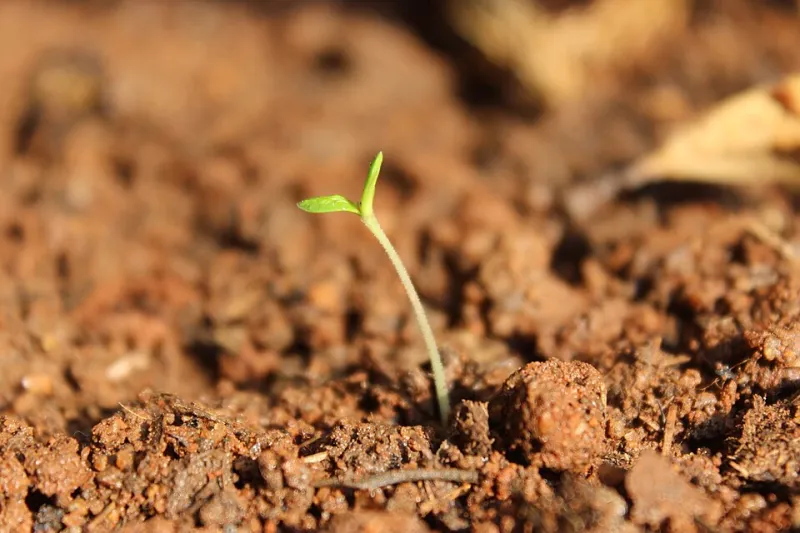
Photo: Ksheera Piraati, CC BY 4.0, via Wikimedia Commons
The first thing you notice in a dry-farmed tomato field is the size of the vines. They are smaller than the irrigated ones down the road, less lush, less showy. The second thing you notice is the fruit. It is dense, sweet, and almost aggressively flavorful, the kind of tomato that makes you rethink the whole water question. That is the paradox at the heart of dry farming: less water, smaller plants, and often a better eating experience.
Dry farming is not new. It is older than irrigation districts and drip tape. But in 2026, as droughts intensify and water rights get more expensive, a growing number of growers are reviving it—not as a stunt, but as a strategy. The question is whether it can scale beyond a few boutique fields and become a real tool for a hotter, drier future.
What dry farming actually means
Dry farming is not neglect. It is a system for growing crops with rainfall and stored soil moisture, no irrigation after planting. In Mediterranean climates like California's, that means capturing winter rain in deep, well-prepared soil, then managing that reservoir through the summer. Growers use cover crops, compost, mulch, and careful tillage to improve infiltration and reduce evaporation. They space plants wider so each one has more soil moisture to draw from. They choose varieties with deep roots and shorter seasons. They weed relentlessly, because weeds are water thieves.
The method works best with crops that can tolerate some stress: tomatoes, melons, squash, potatoes, grains, and grapes. It works less well with lettuce, celery, and other thirsty greens. It also depends on soil. Deep loams and clay loams hold water better than sand. A dry farmer on poor ground is not practicing a method; they are practicing optimism.
The science: soil as a reservoir
The logic is simple even if the execution is not. Healthy soil with high organic matter acts like a sponge. It absorbs winter rain, holds it in pore spaces, and releases it slowly to roots. Aggregated soil resists evaporation and erosion. Deep-rooted crops can reach moisture that shallow-rooted ones cannot. The result is not just water savings; it is a different kind of plant physiology. Dry-farmed tomatoes often have higher soluble solids, which is a fancy way of saying more sugar and flavor. Smaller fruit, concentrated taste.
There are trade-offs. Yields are usually lower. A dry-farmed field may produce half as much as an irrigated one in a good year. In a bad year, it may produce almost nothing. That risk is why dry farming has remained a niche. But for growers with expensive water, unreliable water, or a market that pays a premium for flavor, the math can work.
The growers making the bet
In California, dry-farmed Early Girl tomatoes have become a farmers' market signature, sold at prices that make irrigated growers raise an eyebrow. In the Willamette Valley, small farms are testing dry-farmed tomatoes, squash, and beans. In eastern Washington, some grain growers are revisiting rainfall-only wheat. In New Mexico, traditional acequia farmers have long managed with scarce water, and a new generation is blending old techniques with soil-health practices.
What these growers share is not a romantic attachment to hardship. It is a calculation. Water is getting more expensive and less certain. Soil health is getting more attention. And customers are starting to understand that flavor is not just a function of variety; it is a function of how a plant grows.
The risk is real
Dry farming is not a climate silver bullet. It depends on rainfall that may not come. It requires soils that may not exist on every farm. It demands more careful management, not less. A heat dome in July can wipe out a dry-farmed crop that looked fine in June. And without irrigation, there is no rescue. That is why many growers use dry farming as part of a diversified strategy, not the whole farm.
There is also a policy question. If dry farming reduces yields, it may not fit into a food system that prizes volume. But if it reduces water use and improves flavor, it may fit into a regional food system that prizes resilience. The answer probably depends on the crop, the market, and the watershed.
Could it scale?
Dry farming will not feed everyone. It is not going to replace the Central Valley's irrigated produce aisle. But it could become a meaningful tool for certain crops in certain places, especially as water becomes scarcer. To get there, growers need more research on varieties, soil management, and risk. They need crop insurance that does not punish rainfall-only systems. They need markets that pay for flavor and soil health, not just volume.
For now, the dry farm revolution is small, scattered, and stubborn. It looks like a field of short vines and dense tomatoes. It looks like a bet that the soil can do more than we ask of it. And in a hotter, drier future, that bet may turn out to be less old-fashioned than it seems.